Our automotive choices – and beyond – are often a matter of convention rather than true responses to needs and desires. From university or college degrees, a honeymoon in Koh Samui, to choosing a large SUV for family use despite parking and pollution issues.
If we bought family cars purely based on needs, we’d probably buy a van. Since the first Citroën Berlingo set the rules in this market in 1996, vans have offered an excellent balance of interior space and length, side doors that make getting in and out easier, handling child seats, and huge, accessible cargo areas. In Israel, they also always come with economical diesel engines.
But they look like work vehicles, which is their most common use. In Europe, more equipped versions are also sold, even with functional roof rails that give a bit of an SUV vibe – unlike in Israel. And in a world driven by image, sedans once won family preference, and today it’s crossovers.
The Renault Kangoo was one of the most sought-after vans in Israel since arriving in the 1990s, but imports stopped in 2021, and the market was taken over by the Berlingo and its siblings – Fiat Doblo and Opel Combo, all part of the Stellantis group alongside Citroën – and the Toyota City, which is essentially a Berlingo with a Japanese badge, allowing Toyota to cover this market without the economic justification to develop its own van.
By 2025, nearly 5,000 units of the four Berlingo siblings were sold in Israel, compared with 300 Volkswagen Caddys, the only competitor outside this family. A market share of over 95%, and that’s before Peugeot Rifter lands here as a fifth Berlingo variant. Now, the Kangoo returns in a single version, with five seats priced at NIS 178,000, similar to the competitors except for the Doblo, recently reduced to NIS 170,000.
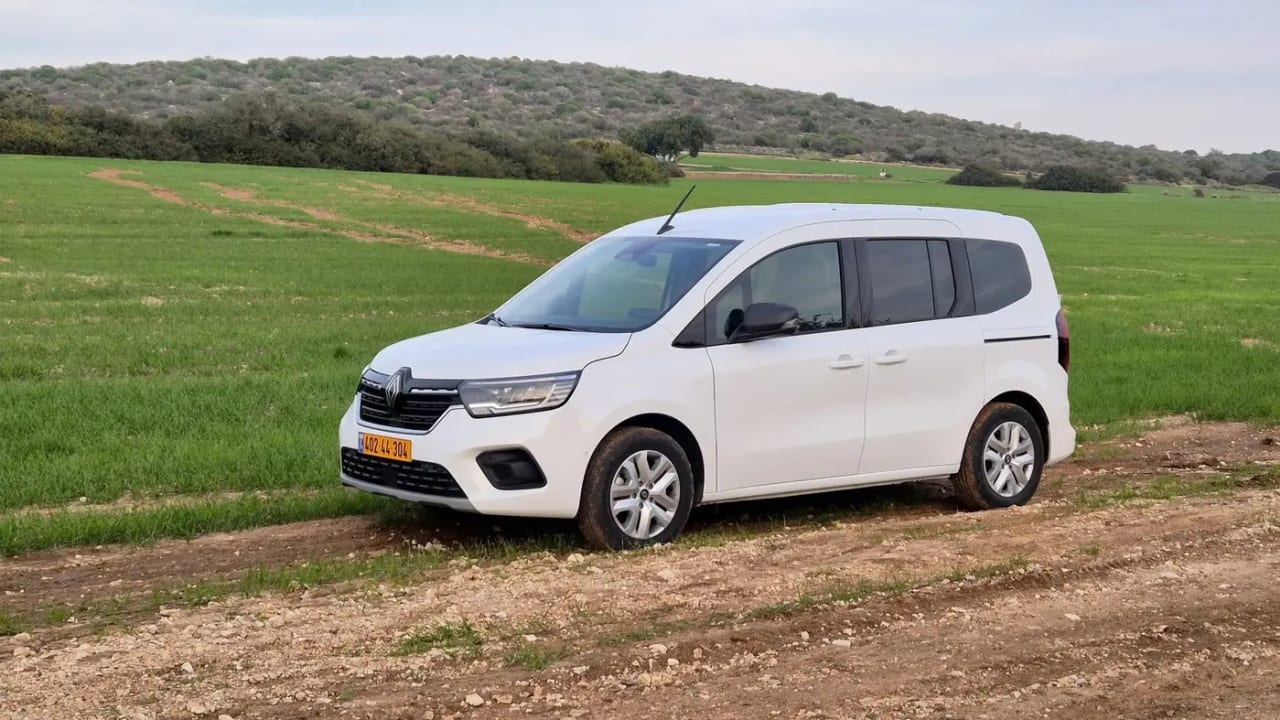
The Kangoo is now in its third generation, launched in 2020, based on a platform shared with the Nissan Qashqai and X-Trail, Renault Espace, and more. Its dimensions have grown to 4.49 m in length, 1.86 m in width, 1.8 m in height, with a 2.72 m wheelbase. It looks boxy, somewhat softened by Renault’s prominent generic front and black-painted side pillars. Alloy wheels could help differentiate it, but here we get steel wheels with hubcaps like in the old days.
Driver’s area:
The first thing you notice inside is space. This vehicle is not just taller than crossovers. There’s plenty of headroom, even a storage shelf, in addition to two overhead compartments on the dashboard, a glovebox, and a console compartment between the front seats. When some Chinese crossovers don’t even have a glovebox, this is a different world. There is always an organized spot for all the parents’ and kids’ belongings – you just need to remember where you put each item.
Seating is higher than a regular car, and outward visibility is excellent. Even the rear, traditionally a weak point for vans due to split rear doors, is reasonable, thanks to Renault’s choice of a two-thirds/one-third split that doesn’t obstruct the central mirror view. Material quality is relatively good for a van; the steering wheel is leather-wrapped and the plastics are firm but acceptable. There are even electric windows in the rear doors, rare for the segment, enhancing the family-car feel. Every crossover feels more luxurious, but the atmosphere here isn’t overly commercial.
The real fun is in the back: Two sliding doors create large entry and exit openings, the windows themselves are big, complementing excellent legroom, virtually unlimited headroom, and a seat that isn’t too high or low. The width allows for three child seats side by side. There are even two USB ports, a 12V socket, and air vent outlets. The sliding doors have a downside: They are heavier than regular doors, and a small child may struggle to open and close them. Perhaps this is for the best, as a door sliding on a rail is a classic trap for tiny fingers.
The cargo area is enormous due to its commercial purpose, with over 700 liters of space – enough for bags, shopping, and children’s bikes. There is also a spare wheel, though it’s located under the rear of the vehicle, making access less convenient.
Equipment:
A 7-inch digital dashboard, 8-inch touchscreen multimedia system with Android Auto and Apple CarPlay, and dual-zone climate control. Standard features include two side doors, 16-inch wheels, and a leather-wrapped steering wheel.
Safety:
The Kangoo received a 4/5-star rating in the European crash test, though in 2021, under a less strict version than today. The Israeli spec includes autonomous emergency braking, lane keeping, driver fatigue alert, automatic high beam, perimeter parking sensors, and a reversing camera. Missing are features now standard in most crossovers and family cars, such as rear emergency braking, adaptive cruise control, blind-spot monitoring, and child presence alerts.
Engine and performance:
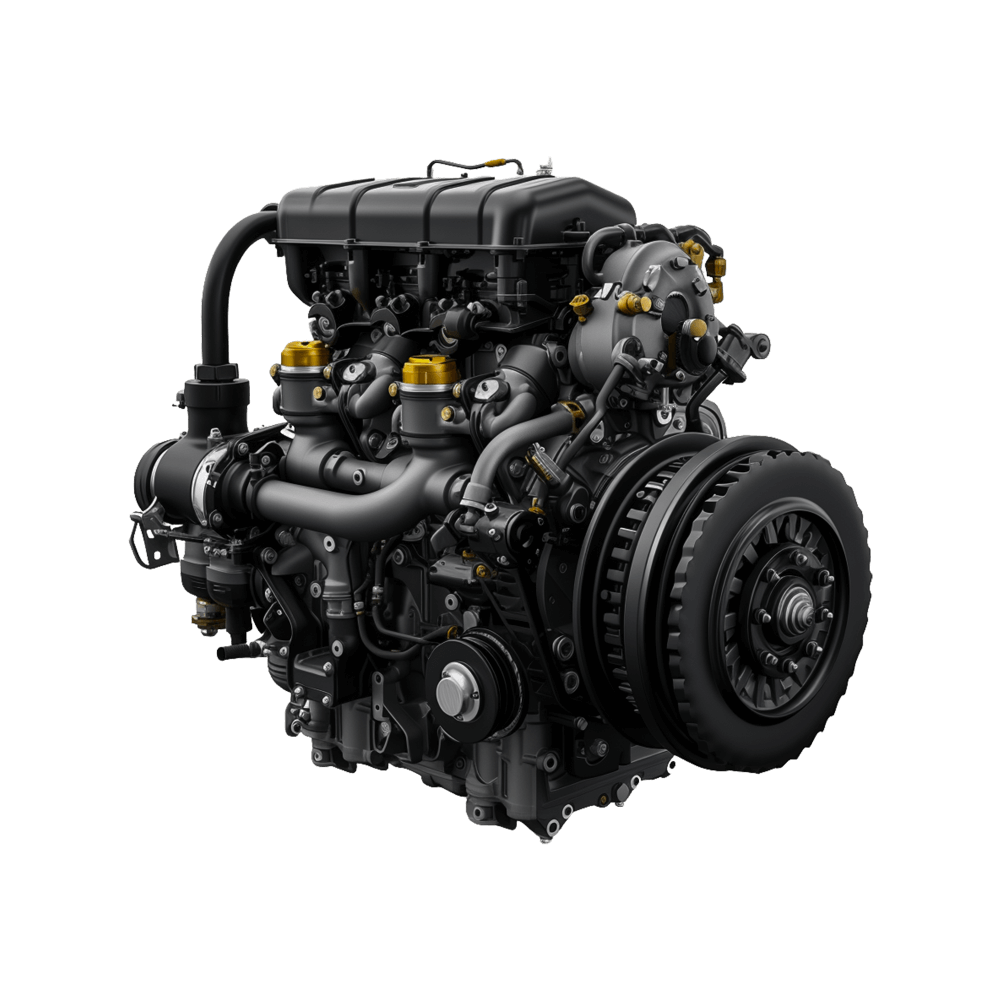
The Kangoo has a 1.5L engine producing 115 hp at 3,750 rpm, with a peak torque of 27.5 kg·m at 1,750 rpm. A seven-speed dual-clutch automatic transmits power to the front wheels. According to the manufacturer, 0–100 km/h takes 13.2 seconds. We didn’t measure, but the Kangoo certainly takes its time accelerating at traffic lights or during overtakes, despite the diesel’s available power. Berlingo and siblings have stronger engines.
At least fuel consumption is good: During testing, the Kangoo averaged 16.5 km/l, close to what a hybrid crossover would achieve under similar conditions.
Comfort and road behavior
The Kangoo is registered as a passenger vehicle in Israel, with a suspension setup that favors comfort at the expense of payload. Maximum load is 512 kg. Some competitors can carry more for cargo purposes. Towing capacity is 1,500 kg with brakes and 750 kg without.
Comfort is excellent even with only the driver, and especially for a family setup. Noise insulation is less than a regular family car, but the ride is fairly quiet, except for diesel sound under load. Road behavior is safe, and the vehicle is easy to control.
Competition is always good, even against the Berlingo monopoly. The Kangoo brings something different to the market: A bit more “private car” character and better quality of life for those who use it daily. For a family driver, it’s a decidedly unsexy box, but super practical and efficient. There are bigger compromises you make for your family, but here, apart from performance, you won’t pay a big price for abundant space and storage – apart from the occasional judging look from neighbors.
Engine: Turbo diesel, 1,461 cc, 115 hp, 27.5 kg·m torque
Transmission: 7-speed automatic, front-wheel drive
Performance (Manufacturer):
Dimensions:
Safety:
Warranty: 3 years or 100,000 km
Copyright ©2026 Jpost Inc. All rights reserved
•
•
Related Article