When new cars are launched, they are often not truly appreciated for what they are. Take a look at Porsche’s first Cayenne Turbo, an over-engineered SUV that featured a low-range transfer case, yet could still reach a top speed of 155 mph. At the time, it was called horrendously ugly. It’s only today that this engineering marvel is really admired.
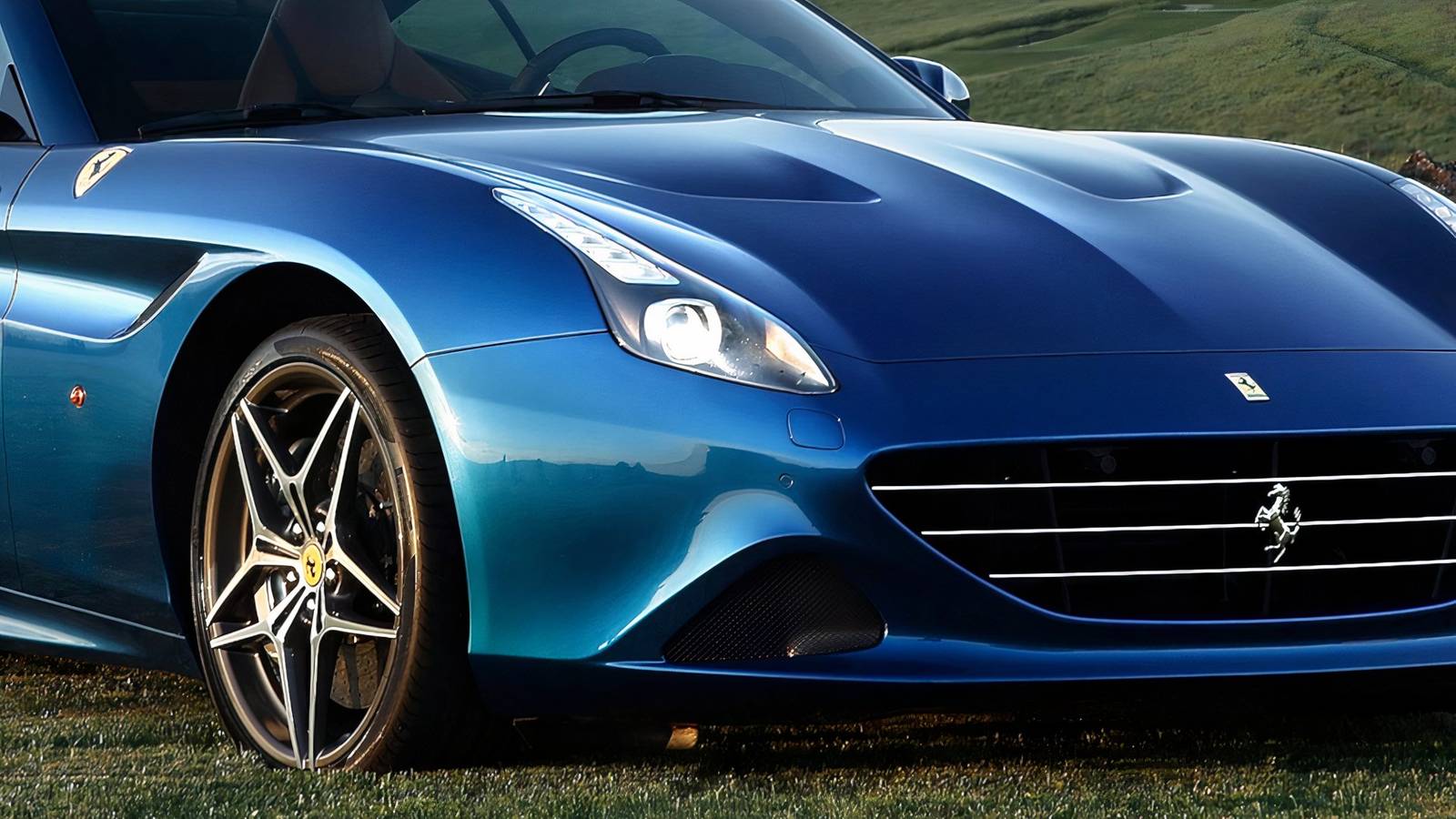
The same happened with the modern Ferrari California. When it debuted at the 2008 Paris Auto Show, the market scoffed at its V8 positioned in the nose, the new dual-clutch automatic transmission, and of course, the new foldable hardtop roof. Has Ferrari gone soft? This image stuck with the California, and as a result it has lost a lot of value.
But that doesn’t mean that the California is a bad sports car. To the contrary, it has been undervalued by the market since its inception. Which all means you could get one today for a bargain price. Plus the prancing horse on the key ring. That’s a win in our books.
2009-2017 Ferrari California Specifications
Engine
4.3L NA V8
Power
453-482 hp
Torque
358-369 lb ft
Transmission
6-speed manual/7-speed DCT auto
0-60 mph
3.6-3.8 seconds
Top speed
193-194 mph
Ferrari was spot on when it revived an old name for its new entry-level grand tourer. With a name like California, imagery of white sandy beaches, lazy afternoons driving down a coastal road, and pumping soothing tunes. And this is exactly the target audience Ferrari had in mind for its new convertible. Young, affluent buyers with a lust for life. Beautiful people, enjoying the beautiful things in life.
Unfortunately, building cars for these folks is what Maserati is for. And the California was supposed to be a Maserati, but Ferrari decided to hold on to the car after Mazer left the project. That’s why the California boasts a few firsts for the Italian brand. It was the first front-engine V8-powered Ferrari, and the first with a folding metal roof. Ferrari also called it a 2+2, but there’s no way you could fit anything resembling a human in the rear seats. If you want a bargain 4-seat Ferrari, may we recommend the FF?
While the new BMW M5 is as much of a powerhouse as ever, if you play the used market correctly, you could have Ferrari’s family car for less.
There was only ever one mid-engined four-seater convertible in automotive history.
Ferrari’s engineers put its F136 4.3-liter naturally aspirated V8 in the nose of the California. This same engine was used by Maserati and Alfa Romeo, but in the Ferrari, it was equipped with a flat-plane crank.
It had a front-mid-engine layout thanks to the engine being located right behind the front axle, and the gearbox – a new seven-speed unit with a dual-clutch setup – was at the back, transaxle-style, sending power to the rear wheels only. Thanks to a high red line of 8,000 rpm, peak power came in at 453 hp, not bad for an NA unit. And it sounded like a real Ferrari.
A worry for Ferrari was the car’s weight. At 4,123 pounds in US trim, it hampered the car’s performance. This was addressed with the 2012 facelift, when a more powerful version of the engine was installed and significant weight was shaven off. Thankfully, the new direct injection helped the engine to achieve 105 hp per liter, while torque (358 lb ft) was also nothing to be ashamed of.
What to know before making the switch
A new and somewhat more compliant supension setup made the California feel a little soft around the corners, especially when driving enthusiastically. Luckily, Ferrari branded the new California from the outset as the entry model in the family, and a boulevard cruiser at that as well. Still, it didn’t sell. Ferrari finally gave the car the engine and suspension it deserved in 2014 with the debut of the California T.
The old NA V8 was removed and replaced with a twin-turbocharged 3.9-liter cross-plane V8 producing 553 hp. The final piece of the puzzle was the Handling Speciale (HS) package, which stiffened the car up, and gave the driver new modes to play with. Finally, it felt like a real Ferrari.
But there was a massive problem. By the time the California T arrived, the 458 Spider was already available. We drove both cars in period, and it’s easy to see why the California and California T struggled to sell. These cars were priced within $50,000 of the finest road cars Ferrari has ever produced. The California overlapped with both the F430 Spider and 458 Spider, and while it was a perfectly decent car, the 458 was and is as close to supercar perfection as you can get. That why a 2009 California has an average 2026 retail price of $59,000, while the F430 sells for $100,000 more. Final model year 458 Spiders are already selling for more than owners originally paid for them. You’re lucky if you can get on for $300,000.
But it’s not just about going up in value. At the time, buyers had no idea which way the market would go, so the driving experience had to make the sale. And while the California and its exhaust note were highly entertaining, and got approving nods from non-car fans, you had to be bonkers to walk away from either the F430 or the 458.
At a whopping $192,000 back in 2009, the California was never cheap to begin with. Luckily, those early models today go for a song thanks to depreciation. According to Classic.com, the average selling price for a 2009 unit is $58,950. We’ve seen a handful with around 40,000 miles going for anything from $67,000 to $69,000. Keeping to this sort of mileage, you can get a used California T from the 2015 model year for a bargain $74,000. If your aim is a low-mileage California, expect to pay $83,000 to $89,000. That’s a lot less than a brand-new four-cylinder Mercedes-AMG SL 43.
We took to the track for a brief stint behind the wheel of the new SL 43 to find out if a four-cylinder SL really cuts the mustard.
In hindsight, one could say that Ferrari miscalculated its target audience when it launched its initial modern-day California. With subsequent versions, power was upped (especially with the turbocharged California T) and handling sharpened. But the original version is still a quality sports car, even though its dynamics are more geared towards boulevards than track days.
At the time, it was a tough sell. With prices as low as they are today, for early models, it represents a great bargain to get into the exclusive prancing horse fraternity. It costs less than a 2026 BMW M2, and while the Bimmer is undoubtedly a better driving tool, it won’t get eyeballed nearly as much as a Ferrari.
Sources: Ferrari.
We want to hear from you! Share your opinions in the thread below and remember to keep it respectful.
Your comment has not been saved
This thread is open for discussion.
Be the first to post your thoughts.