Our core content has been translated to a number of languages.
We hope to add more languages in the future. But in the meantime, you can learn how to translate using Chrome, Firefox and Edge browsers.
Growth in emerging markets has turbocharged global EV sales in 2025, with over a quarter of new cars sold being electric. New markets are rapidly switching to EVs, joining Europe and China in reaching high shares, and leapfrogging legacy auto markets in the process.
This is a major turning point. In 2025, the centre of gravity has moved. Emerging markets are no longer catching up, they are leading the shift to electric mobility. These countries see the strategic advantages of EVs, from cleaner air to reduced fossil fuel imports. The assumption that EV growth will stall outside Europe and China is already outdated. Emerging markets will shape the future of the global car market. The choices made now on charging infrastructure and early support will determine how fast this momentum continues.
Electric vehicle sales have shown strong year on year growth in 2025, reaching over a quarter of total new car sales so far this year. The main difference this year is that as legacy auto markets roll back policies to support EVs, emerging markets are overtaking them.
More markets reaching higher shares outside Europe
In 2019, there were four countries with an EV sales share above 10% – all of them within Europe. Fast forward to 2025, and the landscape has shifted drastically. 39 countries have had an EV share larger than 10% so far in 2025, 12 of which are outside Europe.
China is set to exceed 50% EV share for the first time in 2025. The country is on track to make up close to two thirds of global EV sales for the second year in a row, cementing its place as the largest global EV market. Data for 2025 reflects how other countries are seeking to replicate China’s strategic focus, and access the benefits electrified transport can provide.
Across regions, we are now seeing multiple emerging markets surpassing advanced economies in their EV sales share. While the market share of EVs in countries such as Japan and the US has remained at the same level for the last two years, a radical transformation has been underway, from Southeast Asia to Latin America.
Several ASEAN countries now have among the highest EV sales penetration of any country in the world. Close to 40% of Viet Nam’s new car sales this year have been EVs, almost all of them battery electric vehicles made by local manufacturer VinFast. It is now gaining ground on regional leader Singapore, where the EV sales share has exceeded 40% of new car sales so far in 2025.
Both countries now have higher levels of EV sales penetration than the UK (33%) and the EU (26%). The rise in EV sales across the region has been meteoric – even as recently as 2021, Viet Nam had an EV sales share of less than 0.05%.
Thailand has reached 20% EV sales share and has sold more EVs than EU frontrunner Denmark in the first ten months of 2025. And in Indonesia, EVs have made up 15% of new car sales, surpassing the EV sales share in the United States for the first time.
In Latin America, Uruguay has emerged as a new frontrunner, with EVs making up 27% of new car sales, roughly level with the EU. Costa Rica has reached a sales share of 17% so far this year. Meanwhile, Mexico, Colombia and Brazil continue to show steady growth, and now have a higher EV sales penetration than Japan, where the EV sales share remains around the 3% level it has been at since 2022. For Brazil and Colombia, the EV sales share is now approaching 10%.
In Europe, Türkiye has seen rapid growth in EV sales in 2025, with the share of new car sales reaching 17% – almost all of which are battery electric vehicles (BEVs). The country has overtaken Belgium to become the fourth largest BEV market in Europe by sales volume.
Beyond this, there are several countries which have enacted ambitious policies to incentivise EV adoption, but which don’t publish regular monthly sales data. Ethiopia has banned the import of internal combustion engine (ICE) vehicles since 2024, with official data indicating the EV sales share rose to 60% that year. In Nepal, EVs made up 76% of new car sales in 2024.
Supportive policies enable markets to leapfrog to high EV shares
Rapid increases in EV sales have been helped by the introduction of new policy support mechanisms, as many emerging markets increasingly view EVs as a strategic priority. Electric vehicles offer routes for countries to reduce fossil fuel imports, build new industries and improve air quality.
For some countries, embracing electric vehicles brings the possibility of drawing investment in new industries and creating jobs. Türkiye has introduced tax cuts for new electric vehicles, and made efforts to draw foreign investment in EV manufacturing, including a new BYD manufacturing plant. Indonesia introduced reduced VAT on EV sales for cars which met a certain threshold of local content requirement in 2023. It also temporarily reduced import tariffs for manufacturers who committed to open manufacturing facilities in the country by 2026. As of May 2025, seven EV manufacturers had committed to setting up facilities, as well as Chinese battery manufacturer CATL. Vietnamese EV manufacturer VinFast initially built scale by selling direct to affiliate ride-hailing companies and building its own charging network, before successfully pivoting to the consumer market. So far this year, three quarters of the company’s sales have been direct to consumers, with their flagship VF 3 being the best-selling car in Viet Nam this year. The World Bank has estimated that the EV industry could create 6.5 million jobs in Viet Nam by 2050.
In other countries, it provides the opportunity to reduce fossil fuel imports and boost air quality. Nepal and Ethiopia, countries with major hydropower generation capacity and a high degree of reliance on imported fossil fuels, have both taken rapid steps to incentivise higher rates of adoption – with Ethiopia banning the import of ICE vehicles since 2024. Viet Nam announced a renewed push towards clean transportation in March 2025, including the implementation of low emissions zones in cities, in order to combat intense air pollution. The country ranks in the top ten countries in Asia for air pollution.
These commitments stand in contrast to the markets such as the US and Canada, where incentives have been rolled back in 2025. As part of the ‘Big beautiful bill’, the Trump administration has removed the federal EV tax credit, coming into effect in October 2025. In Canada, allocated funding for the country’s iZEV program ran dry, and the program has been halted since January 2025.
Chinese exports are meeting demand for EVs in new markets
Supportive policies have been complemented by the emergence of China as a globally dominant supplier of EVs, with emerging markets fast becoming top destinations for these vehicles.
In the last two years, almost all the growth in China’s EV exports has come from markets outside of the OECD. The value of China’s EV exports to non-OECD markets has almost tripled since July 2023 (+$16.2bn), while exports to OECD markets increased by around 5% (+$2.7bn).
Beyond supplying the growth in exports, several emerging markets have become the largest destinations for Chinese EVs in absolute terms. Four of the ten largest value markets for Chinese EV exports so far in 2025 are outside of the OECD: Brazil, Mexico, United Arab Emirates and Indonesia.
Due to their high levels of efficiency, electric vehicles are a powerful tool to reduce fossil fuel dependence. Whereas ICE vehicles waste around 80% of the energy in the fuel, EVs use close to 80% of the electricity they consume. This leads to large reductions in overall fossil fuel consumption even if a country’s electricity supply is heavily dependent on fossil generation.
In Brazil, due to its exceptionally clean electricity mix, battery electric vehicles (BEVs) deliver an estimated 90% reduction in fossil fuel demand compared to ICE vehicles, thanks to the low share of fossil fuels in the power mix.
But because an EV is roughly three times as efficient as an ICE vehicle, they always deliver savings. In Indonesia, they reduce fossil fuel demand by close to 50% compared to a typical ICE vehicle, despite an electricity mix dominated by fossil fuels.
It is also set to have profound impacts on future oil demand, with emerging markets set to make up the majority of new car sales between now and 2050. The IEA’s recently launched Current Policy Scenario (CPS), which envisages a world with continued high oil demand, hinges on the assumption that EV sales shares outside of China and Europe remain at 2024 levels. This assumption is already shown to be flawed.
Investment in charging infrastructure and policy mechanisms to support early adoption will be key in order for more markets to follow in the footsteps of these new leaders.
Download the full analysis PDF.
Ember analysed developments in the global passenger car EV market in 2025 using publicly available national data. This was primarily accessed through Robbie Andrew’s data portal, which provides monthly data for many countries. For Latin American countries, data has been accessed via the Zero Emissions Mobility Observatory for Latin America (ZEMO), which standardises data from national sources. The only exception is Costa Rica due to lack of availability, where data has been taken from a national automobile association. Data for South Africa and Australia has been obtained from national automobile association data. For Viet Nam, where no single source of data is available, Ember combined data on Vietnamese passenger car sales from Hyundai, VinFast and the Vietnamese Automobile Association.
All 2025 data covers the period between January-October if available. For Mexico, Canada, Australia and South Africa data is only available up to September 2025. Ethiopia and Nepal do not provide monthly data, and so 2024 data is used from the Ethiopian Energy Outlook and import data for the FY 2024-25 is used for Nepal.
This report uses data from the IEA’s EV data explorer where available as a source of historical data. In the case of Singapore and Uruguay, which are not included in the explorer, national data has been used. Publicly available national data was validated against IEA’s data to ensure accuracy and consistency across sources.
Analysis on primary fossil fuel demand savings from driving a BEV car instead of an ICE car use typical assumptions for each vehicle. Assumed EV efficiency of 20 kWh/100km, ICE efficiency of 7.5 l/100km, and ICE vehicle fuel energy content of 10 kWh/l. It assumed charging an EV used the average grid electricity mix for each country in 2024. To convert to primary energy demand, the analysis assumed refining losses of 15%, coal plant efficiency of 35%, gas plant efficiency of 45%, and other fossil efficiency of 35%.
Chelsea Bruce-Lockhart, Rini Sucahyo, Raul Miranda, Nicolas Fulghum, Lam Pham, Dinita Setyawati, Dave Jones, Tito Das, Eli Terry, Ardhi Arsala Rahmani.
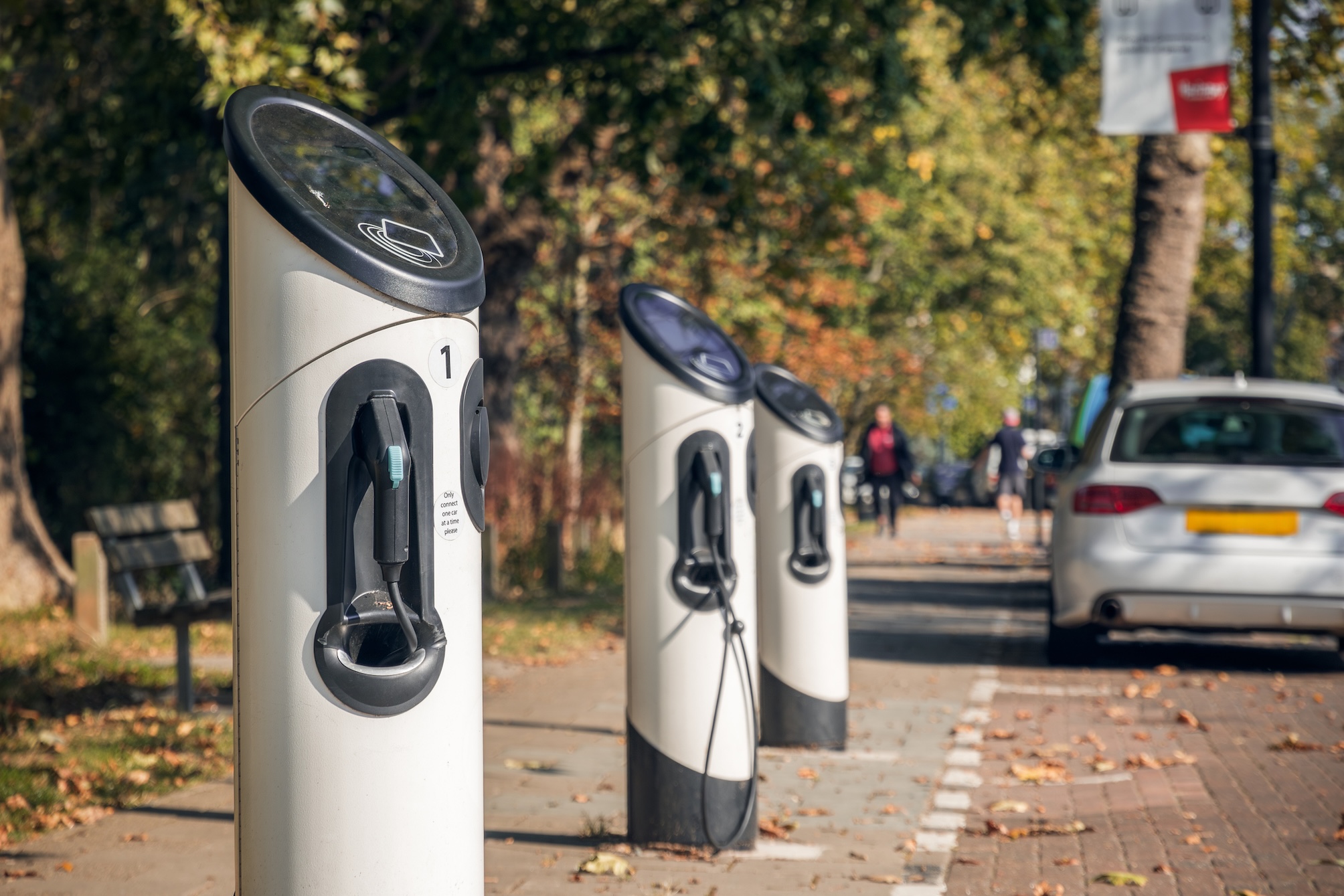
Photo Credit: Victor Huang / iStock / Getty Images Plus
Ember is an energy think tank that aims to accelerate the clean energy transition with data and policy. Ember is the trading name of Ember Energy Research CIC, a Community Interest Company registered in England & Wales #06714443. ‘Ember’ is a trademark held at the United Kingdom and European Union Intellectual Property Offices. All content is released under a Creative Commons Attribution Licence (CC-BY-4.0). Website powered by 100% renewable electricity.
To provide the best experiences, we use technologies like cookies to store and/or access device information. Consenting to these technologies will allow us to process data such as browsing behavior or unique IDs on this site. Not consenting or withdrawing consent, may adversely affect certain features and functions.
Please read our Privacy policy here.