Custom Event Setup
Click on the elements you want to track as custom events. Selected elements will appear in the list below.
Search Results
1-of-60 Bugatti Chiron Pur Sport
duPont REGISTRY Live came online in mid-November 2025, and in just over a month, more than 40 cars have already crossed the block. Unique to our platform, duPont REGISTRY Live also offers a 14-day return policy and a 100% sell-through rate, giving you confidence before you place a bid. The highest bid so far landed just shy of seven figures, achieved by a 1992 Porsche 911 Targa reimagined by Singer. Since launch, our auctions platform has seen everything from sports sedans, sports cars, and modern supercars change hands, but we’ve now hit a new milestone with our very first hypercar offering: a 2023 Bugatti Chiron Pur Sport, one of only 60 built worldwide. With 6,848 miles and single ownership from California, this Pur Sport wears the historically significant Jaune Molsheim theme, pairing Nocturne paint with Giallo Midas accents and a Beluga Black interior. What makes this color combination especially significant is that founder Ettore Bugatti favored yellow and black on his personal cars, and this configuration directly references that lineage. Lower body sections finished in exposed black carbon highlight the Pur Sport’s more aggressive stance. Image Source: Bugatti As a quick primer, the Pur Sport is the track-focused model in the Chiron lineup and sits between Sport and Supersport models in the hierarchy. The iconic Pïech-era quad turbocharged 8.0-liter W16 still produces 1,500 horsepower and 1,180 pound-feet of torque, but the focus, unlike most modern Bugattis, was never about outright speed here. While 60 mph still comes up in under 2.5 seconds, top speed is capped at 218 mph, so engineers could sharpen every other dynamic attribute. Compared to other Chirons, Bugatti shortened the gear ratios by 15 percent, recalibrated the 7-speed dual clutch, and revised the All Wheel Drive system. Spring rates are 65 percent higher up front and 33 percent higher at the rear. Camber and stability control are retuned for aggressive driving. Aero revisions, including a fixed rear wing and enlarged front splitter, generate upto 1,654 pounds of downforce at speed, with exposed aerodynamic elements clearly separating the Pur Sport from other Chiron variants. This specific example carries a staggering $234,300 in factory options with highlights including the Sky View roof, the Pur Sport interior package in Giallo Taurus, a Nocturne painted engine cover, a black-coated exhaust deflector, and bespoke Giallo Midas detailing across the mesh, logos, and rear wing accents. With total Chiron production capped at just 500 examples across all variants, of which only 60 were Pur Sports, and only a handful finished in the historic yellow and black color combination like the one seen here, this particular car presents a rare opportunity to acquire something truly exquisite and exclusive in Bugatti’s modern-day lineage. So if you are a serious collector, head over to duPont REGISTRY Live and place a bid on one of the most tastefully specified reference-grade Chiron Pur Sports ever. View Listing Images: duPont REGISTRY
Read more
Czinger 21C First Drive: A Technological Tour de Force
Climbing into the groundbreaking Czinger 21C hypercar requires a quick lesson in contortionism. After opening the long dihedral door, spin around and sit on the sill logo, then spin again and slide your legs into the pedal box, scooch your tailbone down into the carbon-backed seat, and bring your head in last. Oh, and don’t forget: your passenger needs to get in first, because they’ll straddle the driver in a 1+1 layout most similar to a full-on fighter jet. Cockpit is the only way to accurately describe the 21C’s interior, but I adjusted to the central seating surprisingly quickly – then again, I do regularly drive a right-hand-drive Japanese car on the streets of Los Angeles and once spent a full day slinging a Formula 4 racecar around a track. But the Czinger is far more exotic than a JDM import and even more radical to drive than that open-wheeled racer because this hybrid pumps out up to 1,250 horsepower from a tiny 2.88-liter twin-turbocharged V8, which is derived from motorcycle engines to unlock a screaming 11,000-rpm redline, and then paired with two front electric motors rated for 268 horsepower each to create all-wheel drive traction. I needed every ounce of that traction while effectively time-warping my way up canyons in Malibu, even on roads I know, as they say, like the back of my hands. Luckily, once inside, the 21C offers excellent visibility over the dramatic fenders. And the switchgear never seems as complex as an airplane’s despite the crazy AI-designed and 3D-printed components visible everywhere, from the gauge cluster surround to the suspension and even the textural pedals. Push the stop-start button on the right, select drive modes to the left, and dial in climate controls to the right. Then, I spent most of the drive using the paddle shifters – which also shift down into reverse below neutral in similar fashion as a motorbike. I needed front axle lift, accessible via a knob on the teensy tiny racecar steering wheel, quite regularly because this, the low-drag V Max car, rides low enough to reach a top speed of 253 miles an hour. And I never even went into Track Plus mode to drop the chassis down another 30 millimeters, other than to pose for pictures. I never came close to that top speed, but my tailbone felt about six inches off the ground the whole time. The suspension obviously prioritizes performance, but in Street mode, the dampers still stay compliant enough to absorb bumps and ruts without sending any jolts through the rigid chassis. Street mode also prioritizes the electric motors, then kicks on the internal-combustion engine whenever the driver dips deeply enough into the throttle or if the EV range from just 4.2-kilowatt-hours of lithium-ion batteries gets too low. Switch into Sport, and the engine runs all the time, with a deep and lumping idle. Throttle modulation at first felt fairly normal, but as soon as I nudged my right toe a little extra, the 21C combines the immediate punch of an EV with the screaming wail of a superbike and absolutely launches down the road, almost quickly enough to snatch the air out of lungs, with so much power available at any rev that the ECU cues traction control intervention almost on all but the smoothest roads. Traction control makes this whole exercise in technological innovation possible, simply because there’s so much potential in the chassis, which Czinger designed as an early showcase of the iterative design algorithms pioneered by sister company Divergent. Lightweight and rigid, the components from the engine cradle to the subframes, and even the wheel hubs that integrate brake calipers and fluid lines into one solid unit, all resemble H.R. Giger’s haunting set designs in Alien. I’ve known about the potentially world-changing tech for years now, and truly wondered how a startup hypercar manufacturer might prioritize driveability while demonstrating such obviously avant-garde innovation. The brake pedal, just as one example, brought me straight back to that day in the F4 car, because the solid fluid routing relies less on hosing that typically swells under pressure – so instead, the firmness greeting my left foot (this car seems ripe for two-foot driving) truly approached a racecar level of responsiveness. But the pedal also required serious muscular exertion when hauling down speed. And the 21C wants to rip off at breakneck speed all the time, only settling down and becoming happier once I started to crest 50, 60, and 70 miles per hour. After braking later and later, cutting the steering wheel deep into corners reveals the incredible spiderweb effect of centralized mass, the 1+1 layout, and 3D-printed engineering and all-wheel-drive grip, creating a planted sensation that my most aggressive driving simply could not faze. The 21C does appreciate gentler inputs, though, especially while trail braking, as I learned by the end of my drive. If only so the front-axle regen can help to regulate traction, too. And other than the heavy steering requiring a hefty effort, I’d never guess this hypercar weighs 3,668 pounds. I did notice some low-speed shuddering from the steering wheel, something I’ve experienced in a few other high-power EVs previously. I suspect the electro-hydraulic steering system effectively needs to fight the EV motors a little while creeping along—now add so much more mechanical grip from the 21C’s gargantuan 265-mm front and 325-mm rear Michelin tires. Those tires sit under the exaggerated fenders that further contribute to the aerodynamics of a 252-mph tactical missile. The design alone turns more heads than anything – bar none – I’ve ever driven, just an unfamiliar vision of a future almost inconceivable to the ordinary mind. I’d take my 21C in the gorgeous exposed blue-weave carbon, and also prefer black leather everywhere on the inside rather than my test car’s blue Alcantara? If only to enhance the curb appeal and impression of quality to match the high-tech chassis and powertrain of this $2.7 million hypercar. Where most supercar and hypercar manufacturers these days aim to leverage modern tech to broaden the scope between performance and daily driveability, Czinger entertains no such fantasies about the 21C because nothing comes anywhere near comparing to this car. Even if the ride quality never crosses the border into discomfort, at least in Street and Sport mode, this car simply demands attention in any driving scenario, whether tooling around in traffic, highway cruising, ripping through the canyons, or carving up a racetrack. I never felt quite natural driving with one hand, for example, because I never forgot that I was sitting behind the wheel of a technological tour de force. Short of prototype racecars and the world’s greatest superbikes, this is simply the most hardcore vehicle I’ve ever driven. The mind simply balks at imagining the raw G-forces this car might exert on the human body when pushed to the limit on a racetrack, where the 21C continuously sets production car lap records all over America. Yet if you’re flexible enough to climb in – and I did sit in the backseat, where at six-foot-one I fit just fine – the Czinger is also surprisingly livable, even if lacking refinement in some areas, including the hilarious startup music and an incongruously outdated gauge cluster configuration. Living with some quirks always comes along with bleeding-edge tech, though, and should be expected in such an utterly unique supercar,truly unlike anything else on the road. View All Supercars & Exotic Cars For Sale Images: Michael Van Runkle
Read more
How to Buy: Porsche’s Exclusive Carrera GT Collection Des…
One of Porsche’s most iconic creations celebrates a milestone. While we can all certainly agree that the Porsche Carrera GT is currently viewed as a legendary supercar among collectors and enthusiasts, now trading well into the +$2 million range, it sort of became a Cinderella story for Stuttgart’s V10 masterpiece. What may have been considered ahead of its time, evolving into a collector classic for drivers yearning for the ultimate analog driving experience, the Carrera GT continued to age like a fine wine as it cemented itself in the automotive world. Now, 25 years after its concept debut in September 2000, the Carrera GT is getting its much-deserved recognition as Porsche celebrates its 25th Anniversary with an exclusive lifestyle collection designed by French collector, streetwear designer, and most importantly, Porsche purist, Arthur Kar. To commemorate the Anniversary, Kar dove into the archives of Porsche and PUMA Motorsports to design and curate a capsule collection honoring the uprise of the Carrera GT and its continuous influence on the future of supercars. The unisex collection features head-to-toe styles, including racing zip-up jackets, t-shirts, and accessories, all sporting embroidered Carrera GT badging and silhouettes. And while we’re still waiting until launch day to get the full scope of the entire lineup, the highlight of the collection has to be the special edition PUMA Motorsports Speedcat Pro sneakers. Scripted with Porsche and Carrera GT touches that make them instantly collectible, there’s no better way to celebrate a car than with one of the most popular driving shoes on the planet. As we wait patiently for the anticipated launch on Thursday, September 25th at 11:00 am EST, the Carrera GT 25th Anniversary Collection will be a quick sellout, so buyers had better be ready. Check back into duPont REGISTRY tomorrow morning for the ‘How to Buy’ info on Arthur Kars’ Porsche Carrera GT capsule collection. Shop The Collection View this post on Instagram A post shared by Porsche (@porsche) Source: Porsche
Read more
Search Results
1-of-60 Bugatti Chiron Pur Sport
duPont REGISTRY Live came online in mid-November 2025, and in just over a month, more than 40 cars have already crossed the block. Unique to our platform, duPont REGISTRY Live also offers a 14-day return policy and a 100% sell-through rate, giving you confidence before you place a bid. The highest bid so far landed just shy of seven figures, achieved by a 1992 Porsche 911 Targa reimagined by Singer. Since launch, our auctions platform has seen everything from sports sedans, sports cars, and modern supercars change hands, but we’ve now hit a new milestone with our very first hypercar offering: a 2023 Bugatti Chiron Pur Sport, one of only 60 built worldwide. With 6,848 miles and single ownership from California, this Pur Sport wears the historically significant Jaune Molsheim theme, pairing Nocturne paint with Giallo Midas accents and a Beluga Black interior. What makes this color combination especially significant is that founder Ettore Bugatti favored yellow and black on his personal cars, and this configuration directly references that lineage. Lower body sections finished in exposed black carbon highlight the Pur Sport’s more aggressive stance. Image Source: Bugatti As a quick primer, the Pur Sport is the track-focused model in the Chiron lineup and sits between Sport and Supersport models in the hierarchy. The iconic Pïech-era quad turbocharged 8.0-liter W16 still produces 1,500 horsepower and 1,180 pound-feet of torque, but the focus, unlike most modern Bugattis, was never about outright speed here. While 60 mph still comes up in under 2.5 seconds, top speed is capped at 218 mph, so engineers could sharpen every other dynamic attribute. Compared to other Chirons, Bugatti shortened the gear ratios by 15 percent, recalibrated the 7-speed dual clutch, and revised the All Wheel Drive system. Spring rates are 65 percent higher up front and 33 percent higher at the rear. Camber and stability control are retuned for aggressive driving. Aero revisions, including a fixed rear wing and enlarged front splitter, generate upto 1,654 pounds of downforce at speed, with exposed aerodynamic elements clearly separating the Pur Sport from other Chiron variants. This specific example carries a staggering $234,300 in factory options with highlights including the Sky View roof, the Pur Sport interior package in Giallo Taurus, a Nocturne painted engine cover, a black-coated exhaust deflector, and bespoke Giallo Midas detailing across the mesh, logos, and rear wing accents. With total Chiron production capped at just 500 examples across all variants, of which only 60 were Pur Sports, and only a handful finished in the historic yellow and black color combination like the one seen here, this particular car presents a rare opportunity to acquire something truly exquisite and exclusive in Bugatti’s modern-day lineage. So if you are a serious collector, head over to duPont REGISTRY Live and place a bid on one of the most tastefully specified reference-grade Chiron Pur Sports ever. View Listing Images: duPont REGISTRY
Read more
Czinger 21C First Drive: A Technological Tour de Force
Climbing into the groundbreaking Czinger 21C hypercar requires a quick lesson in contortionism. After opening the long dihedral door, spin around and sit on the sill logo, then spin again and slide your legs into the pedal box, scooch your tailbone down into the carbon-backed seat, and bring your head in last. Oh, and don’t forget: your passenger needs to get in first, because they’ll straddle the driver in a 1+1 layout most similar to a full-on fighter jet. Cockpit is the only way to accurately describe the 21C’s interior, but I adjusted to the central seating surprisingly quickly – then again, I do regularly drive a right-hand-drive Japanese car on the streets of Los Angeles and once spent a full day slinging a Formula 4 racecar around a track. But the Czinger is far more exotic than a JDM import and even more radical to drive than that open-wheeled racer because this hybrid pumps out up to 1,250 horsepower from a tiny 2.88-liter twin-turbocharged V8, which is derived from motorcycle engines to unlock a screaming 11,000-rpm redline, and then paired with two front electric motors rated for 268 horsepower each to create all-wheel drive traction. I needed every ounce of that traction while effectively time-warping my way up canyons in Malibu, even on roads I know, as they say, like the back of my hands. Luckily, once inside, the 21C offers excellent visibility over the dramatic fenders. And the switchgear never seems as complex as an airplane’s despite the crazy AI-designed and 3D-printed components visible everywhere, from the gauge cluster surround to the suspension and even the textural pedals. Push the stop-start button on the right, select drive modes to the left, and dial in climate controls to the right. Then, I spent most of the drive using the paddle shifters – which also shift down into reverse below neutral in similar fashion as a motorbike. I needed front axle lift, accessible via a knob on the teensy tiny racecar steering wheel, quite regularly because this, the low-drag V Max car, rides low enough to reach a top speed of 253 miles an hour. And I never even went into Track Plus mode to drop the chassis down another 30 millimeters, other than to pose for pictures. I never came close to that top speed, but my tailbone felt about six inches off the ground the whole time. The suspension obviously prioritizes performance, but in Street mode, the dampers still stay compliant enough to absorb bumps and ruts without sending any jolts through the rigid chassis. Street mode also prioritizes the electric motors, then kicks on the internal-combustion engine whenever the driver dips deeply enough into the throttle or if the EV range from just 4.2-kilowatt-hours of lithium-ion batteries gets too low. Switch into Sport, and the engine runs all the time, with a deep and lumping idle. Throttle modulation at first felt fairly normal, but as soon as I nudged my right toe a little extra, the 21C combines the immediate punch of an EV with the screaming wail of a superbike and absolutely launches down the road, almost quickly enough to snatch the air out of lungs, with so much power available at any rev that the ECU cues traction control intervention almost on all but the smoothest roads. Traction control makes this whole exercise in technological innovation possible, simply because there’s so much potential in the chassis, which Czinger designed as an early showcase of the iterative design algorithms pioneered by sister company Divergent. Lightweight and rigid, the components from the engine cradle to the subframes, and even the wheel hubs that integrate brake calipers and fluid lines into one solid unit, all resemble H.R. Giger’s haunting set designs in Alien. I’ve known about the potentially world-changing tech for years now, and truly wondered how a startup hypercar manufacturer might prioritize driveability while demonstrating such obviously avant-garde innovation. The brake pedal, just as one example, brought me straight back to that day in the F4 car, because the solid fluid routing relies less on hosing that typically swells under pressure – so instead, the firmness greeting my left foot (this car seems ripe for two-foot driving) truly approached a racecar level of responsiveness. But the pedal also required serious muscular exertion when hauling down speed. And the 21C wants to rip off at breakneck speed all the time, only settling down and becoming happier once I started to crest 50, 60, and 70 miles per hour. After braking later and later, cutting the steering wheel deep into corners reveals the incredible spiderweb effect of centralized mass, the 1+1 layout, and 3D-printed engineering and all-wheel-drive grip, creating a planted sensation that my most aggressive driving simply could not faze. The 21C does appreciate gentler inputs, though, especially while trail braking, as I learned by the end of my drive. If only so the front-axle regen can help to regulate traction, too. And other than the heavy steering requiring a hefty effort, I’d never guess this hypercar weighs 3,668 pounds. I did notice some low-speed shuddering from the steering wheel, something I’ve experienced in a few other high-power EVs previously. I suspect the electro-hydraulic steering system effectively needs to fight the EV motors a little while creeping along—now add so much more mechanical grip from the 21C’s gargantuan 265-mm front and 325-mm rear Michelin tires. Those tires sit under the exaggerated fenders that further contribute to the aerodynamics of a 252-mph tactical missile. The design alone turns more heads than anything – bar none – I’ve ever driven, just an unfamiliar vision of a future almost inconceivable to the ordinary mind. I’d take my 21C in the gorgeous exposed blue-weave carbon, and also prefer black leather everywhere on the inside rather than my test car’s blue Alcantara? If only to enhance the curb appeal and impression of quality to match the high-tech chassis and powertrain of this $2.7 million hypercar. Where most supercar and hypercar manufacturers these days aim to leverage modern tech to broaden the scope between performance and daily driveability, Czinger entertains no such fantasies about the 21C because nothing comes anywhere near comparing to this car. Even if the ride quality never crosses the border into discomfort, at least in Street and Sport mode, this car simply demands attention in any driving scenario, whether tooling around in traffic, highway cruising, ripping through the canyons, or carving up a racetrack. I never felt quite natural driving with one hand, for example, because I never forgot that I was sitting behind the wheel of a technological tour de force. Short of prototype racecars and the world’s greatest superbikes, this is simply the most hardcore vehicle I’ve ever driven. The mind simply balks at imagining the raw G-forces this car might exert on the human body when pushed to the limit on a racetrack, where the 21C continuously sets production car lap records all over America. Yet if you’re flexible enough to climb in – and I did sit in the backseat, where at six-foot-one I fit just fine – the Czinger is also surprisingly livable, even if lacking refinement in some areas, including the hilarious startup music and an incongruously outdated gauge cluster configuration. Living with some quirks always comes along with bleeding-edge tech, though, and should be expected in such an utterly unique supercar,truly unlike anything else on the road. View All Supercars & Exotic Cars For Sale Images: Michael Van Runkle
Read more
How to Buy: Porsche’s Exclusive Carrera GT Collection Des…
One of Porsche’s most iconic creations celebrates a milestone. While we can all certainly agree that the Porsche Carrera GT is currently viewed as a legendary supercar among collectors and enthusiasts, now trading well into the +$2 million range, it sort of became a Cinderella story for Stuttgart’s V10 masterpiece. What may have been considered ahead of its time, evolving into a collector classic for drivers yearning for the ultimate analog driving experience, the Carrera GT continued to age like a fine wine as it cemented itself in the automotive world. Now, 25 years after its concept debut in September 2000, the Carrera GT is getting its much-deserved recognition as Porsche celebrates its 25th Anniversary with an exclusive lifestyle collection designed by French collector, streetwear designer, and most importantly, Porsche purist, Arthur Kar. To commemorate the Anniversary, Kar dove into the archives of Porsche and PUMA Motorsports to design and curate a capsule collection honoring the uprise of the Carrera GT and its continuous influence on the future of supercars. The unisex collection features head-to-toe styles, including racing zip-up jackets, t-shirts, and accessories, all sporting embroidered Carrera GT badging and silhouettes. And while we’re still waiting until launch day to get the full scope of the entire lineup, the highlight of the collection has to be the special edition PUMA Motorsports Speedcat Pro sneakers. Scripted with Porsche and Carrera GT touches that make them instantly collectible, there’s no better way to celebrate a car than with one of the most popular driving shoes on the planet. As we wait patiently for the anticipated launch on Thursday, September 25th at 11:00 am EST, the Carrera GT 25th Anniversary Collection will be a quick sellout, so buyers had better be ready. Check back into duPont REGISTRY tomorrow morning for the ‘How to Buy’ info on Arthur Kars’ Porsche Carrera GT capsule collection. Shop The Collection View this post on Instagram A post shared by Porsche (@porsche) Source: Porsche
Read more
Search Results
1-of-60 Bugatti Chiron Pur Sport
duPont REGISTRY Live came online in mid-November 2025, and in just over a month, more than 40 cars have already crossed the block. Unique to our platform, duPont REGISTRY Live also offers a 14-day return policy and a 100% sell-through rate, giving you confidence before you place a bid. The highest bid so far landed just shy of seven figures, achieved by a 1992 Porsche 911 Targa reimagined by Singer. Since launch, our auctions platform has seen everything from sports sedans, sports cars, and modern supercars change hands, but we’ve now hit a new milestone with our very first hypercar offering: a 2023 Bugatti Chiron Pur Sport, one of only 60 built worldwide. With 6,848 miles and single ownership from California, this Pur Sport wears the historically significant Jaune Molsheim theme, pairing Nocturne paint with Giallo Midas accents and a Beluga Black interior. What makes this color combination especially significant is that founder Ettore Bugatti favored yellow and black on his personal cars, and this configuration directly references that lineage. Lower body sections finished in exposed black carbon highlight the Pur Sport’s more aggressive stance. Image Source: Bugatti As a quick primer, the Pur Sport is the track-focused model in the Chiron lineup and sits between Sport and Supersport models in the hierarchy. The iconic Pïech-era quad turbocharged 8.0-liter W16 still produces 1,500 horsepower and 1,180 pound-feet of torque, but the focus, unlike most modern Bugattis, was never about outright speed here. While 60 mph still comes up in under 2.5 seconds, top speed is capped at 218 mph, so engineers could sharpen every other dynamic attribute. Compared to other Chirons, Bugatti shortened the gear ratios by 15 percent, recalibrated the 7-speed dual clutch, and revised the All Wheel Drive system. Spring rates are 65 percent higher up front and 33 percent higher at the rear. Camber and stability control are retuned for aggressive driving. Aero revisions, including a fixed rear wing and enlarged front splitter, generate upto 1,654 pounds of downforce at speed, with exposed aerodynamic elements clearly separating the Pur Sport from other Chiron variants. This specific example carries a staggering $234,300 in factory options with highlights including the Sky View roof, the Pur Sport interior package in Giallo Taurus, a Nocturne painted engine cover, a black-coated exhaust deflector, and bespoke Giallo Midas detailing across the mesh, logos, and rear wing accents. With total Chiron production capped at just 500 examples across all variants, of which only 60 were Pur Sports, and only a handful finished in the historic yellow and black color combination like the one seen here, this particular car presents a rare opportunity to acquire something truly exquisite and exclusive in Bugatti’s modern-day lineage. So if you are a serious collector, head over to duPont REGISTRY Live and place a bid on one of the most tastefully specified reference-grade Chiron Pur Sports ever. View Listing Images: duPont REGISTRY
Read more
Czinger 21C First Drive: A Technological Tour de Force
Climbing into the groundbreaking Czinger 21C hypercar requires a quick lesson in contortionism. After opening the long dihedral door, spin around and sit on the sill logo, then spin again and slide your legs into the pedal box, scooch your tailbone down into the carbon-backed seat, and bring your head in last. Oh, and don’t forget: your passenger needs to get in first, because they’ll straddle the driver in a 1+1 layout most similar to a full-on fighter jet. Cockpit is the only way to accurately describe the 21C’s interior, but I adjusted to the central seating surprisingly quickly – then again, I do regularly drive a right-hand-drive Japanese car on the streets of Los Angeles and once spent a full day slinging a Formula 4 racecar around a track. But the Czinger is far more exotic than a JDM import and even more radical to drive than that open-wheeled racer because this hybrid pumps out up to 1,250 horsepower from a tiny 2.88-liter twin-turbocharged V8, which is derived from motorcycle engines to unlock a screaming 11,000-rpm redline, and then paired with two front electric motors rated for 268 horsepower each to create all-wheel drive traction. I needed every ounce of that traction while effectively time-warping my way up canyons in Malibu, even on roads I know, as they say, like the back of my hands. Luckily, once inside, the 21C offers excellent visibility over the dramatic fenders. And the switchgear never seems as complex as an airplane’s despite the crazy AI-designed and 3D-printed components visible everywhere, from the gauge cluster surround to the suspension and even the textural pedals. Push the stop-start button on the right, select drive modes to the left, and dial in climate controls to the right. Then, I spent most of the drive using the paddle shifters – which also shift down into reverse below neutral in similar fashion as a motorbike. I needed front axle lift, accessible via a knob on the teensy tiny racecar steering wheel, quite regularly because this, the low-drag V Max car, rides low enough to reach a top speed of 253 miles an hour. And I never even went into Track Plus mode to drop the chassis down another 30 millimeters, other than to pose for pictures. I never came close to that top speed, but my tailbone felt about six inches off the ground the whole time. The suspension obviously prioritizes performance, but in Street mode, the dampers still stay compliant enough to absorb bumps and ruts without sending any jolts through the rigid chassis. Street mode also prioritizes the electric motors, then kicks on the internal-combustion engine whenever the driver dips deeply enough into the throttle or if the EV range from just 4.2-kilowatt-hours of lithium-ion batteries gets too low. Switch into Sport, and the engine runs all the time, with a deep and lumping idle. Throttle modulation at first felt fairly normal, but as soon as I nudged my right toe a little extra, the 21C combines the immediate punch of an EV with the screaming wail of a superbike and absolutely launches down the road, almost quickly enough to snatch the air out of lungs, with so much power available at any rev that the ECU cues traction control intervention almost on all but the smoothest roads. Traction control makes this whole exercise in technological innovation possible, simply because there’s so much potential in the chassis, which Czinger designed as an early showcase of the iterative design algorithms pioneered by sister company Divergent. Lightweight and rigid, the components from the engine cradle to the subframes, and even the wheel hubs that integrate brake calipers and fluid lines into one solid unit, all resemble H.R. Giger’s haunting set designs in Alien. I’ve known about the potentially world-changing tech for years now, and truly wondered how a startup hypercar manufacturer might prioritize driveability while demonstrating such obviously avant-garde innovation. The brake pedal, just as one example, brought me straight back to that day in the F4 car, because the solid fluid routing relies less on hosing that typically swells under pressure – so instead, the firmness greeting my left foot (this car seems ripe for two-foot driving) truly approached a racecar level of responsiveness. But the pedal also required serious muscular exertion when hauling down speed. And the 21C wants to rip off at breakneck speed all the time, only settling down and becoming happier once I started to crest 50, 60, and 70 miles per hour. After braking later and later, cutting the steering wheel deep into corners reveals the incredible spiderweb effect of centralized mass, the 1+1 layout, and 3D-printed engineering and all-wheel-drive grip, creating a planted sensation that my most aggressive driving simply could not faze. The 21C does appreciate gentler inputs, though, especially while trail braking, as I learned by the end of my drive. If only so the front-axle regen can help to regulate traction, too. And other than the heavy steering requiring a hefty effort, I’d never guess this hypercar weighs 3,668 pounds. I did notice some low-speed shuddering from the steering wheel, something I’ve experienced in a few other high-power EVs previously. I suspect the electro-hydraulic steering system effectively needs to fight the EV motors a little while creeping along—now add so much more mechanical grip from the 21C’s gargantuan 265-mm front and 325-mm rear Michelin tires. Those tires sit under the exaggerated fenders that further contribute to the aerodynamics of a 252-mph tactical missile. The design alone turns more heads than anything – bar none – I’ve ever driven, just an unfamiliar vision of a future almost inconceivable to the ordinary mind. I’d take my 21C in the gorgeous exposed blue-weave carbon, and also prefer black leather everywhere on the inside rather than my test car’s blue Alcantara? If only to enhance the curb appeal and impression of quality to match the high-tech chassis and powertrain of this $2.7 million hypercar. Where most supercar and hypercar manufacturers these days aim to leverage modern tech to broaden the scope between performance and daily driveability, Czinger entertains no such fantasies about the 21C because nothing comes anywhere near comparing to this car. Even if the ride quality never crosses the border into discomfort, at least in Street and Sport mode, this car simply demands attention in any driving scenario, whether tooling around in traffic, highway cruising, ripping through the canyons, or carving up a racetrack. I never felt quite natural driving with one hand, for example, because I never forgot that I was sitting behind the wheel of a technological tour de force. Short of prototype racecars and the world’s greatest superbikes, this is simply the most hardcore vehicle I’ve ever driven. The mind simply balks at imagining the raw G-forces this car might exert on the human body when pushed to the limit on a racetrack, where the 21C continuously sets production car lap records all over America. Yet if you’re flexible enough to climb in – and I did sit in the backseat, where at six-foot-one I fit just fine – the Czinger is also surprisingly livable, even if lacking refinement in some areas, including the hilarious startup music and an incongruously outdated gauge cluster configuration. Living with some quirks always comes along with bleeding-edge tech, though, and should be expected in such an utterly unique supercar,truly unlike anything else on the road. View All Supercars & Exotic Cars For Sale Images: Michael Van Runkle
Read more
How to Buy: Porsche’s Exclusive Carrera GT Collection Des…
One of Porsche’s most iconic creations celebrates a milestone. While we can all certainly agree that the Porsche Carrera GT is currently viewed as a legendary supercar among collectors and enthusiasts, now trading well into the +$2 million range, it sort of became a Cinderella story for Stuttgart’s V10 masterpiece. What may have been considered ahead of its time, evolving into a collector classic for drivers yearning for the ultimate analog driving experience, the Carrera GT continued to age like a fine wine as it cemented itself in the automotive world. Now, 25 years after its concept debut in September 2000, the Carrera GT is getting its much-deserved recognition as Porsche celebrates its 25th Anniversary with an exclusive lifestyle collection designed by French collector, streetwear designer, and most importantly, Porsche purist, Arthur Kar. To commemorate the Anniversary, Kar dove into the archives of Porsche and PUMA Motorsports to design and curate a capsule collection honoring the uprise of the Carrera GT and its continuous influence on the future of supercars. The unisex collection features head-to-toe styles, including racing zip-up jackets, t-shirts, and accessories, all sporting embroidered Carrera GT badging and silhouettes. And while we’re still waiting until launch day to get the full scope of the entire lineup, the highlight of the collection has to be the special edition PUMA Motorsports Speedcat Pro sneakers. Scripted with Porsche and Carrera GT touches that make them instantly collectible, there’s no better way to celebrate a car than with one of the most popular driving shoes on the planet. As we wait patiently for the anticipated launch on Thursday, September 25th at 11:00 am EST, the Carrera GT 25th Anniversary Collection will be a quick sellout, so buyers had better be ready. Check back into duPont REGISTRY tomorrow morning for the ‘How to Buy’ info on Arthur Kars’ Porsche Carrera GT capsule collection. Shop The Collection View this post on Instagram A post shared by Porsche (@porsche) Source: Porsche
Read more
Search Results
1-of-60 Bugatti Chiron Pur Sport
duPont REGISTRY Live came online in mid-November 2025, and in just over a month, more than 40 cars have already crossed the block. Unique to our platform, duPont REGISTRY Live also offers a 14-day return policy and a 100% sell-through rate, giving you confidence before you place a bid. The highest bid so far landed just shy of seven figures, achieved by a 1992 Porsche 911 Targa reimagined by Singer. Since launch, our auctions platform has seen everything from sports sedans, sports cars, and modern supercars change hands, but we’ve now hit a new milestone with our very first hypercar offering: a 2023 Bugatti Chiron Pur Sport, one of only 60 built worldwide. With 6,848 miles and single ownership from California, this Pur Sport wears the historically significant Jaune Molsheim theme, pairing Nocturne paint with Giallo Midas accents and a Beluga Black interior. What makes this color combination especially significant is that founder Ettore Bugatti favored yellow and black on his personal cars, and this configuration directly references that lineage. Lower body sections finished in exposed black carbon highlight the Pur Sport’s more aggressive stance. Image Source: Bugatti As a quick primer, the Pur Sport is the track-focused model in the Chiron lineup and sits between Sport and Supersport models in the hierarchy. The iconic Pïech-era quad turbocharged 8.0-liter W16 still produces 1,500 horsepower and 1,180 pound-feet of torque, but the focus, unlike most modern Bugattis, was never about outright speed here. While 60 mph still comes up in under 2.5 seconds, top speed is capped at 218 mph, so engineers could sharpen every other dynamic attribute. Compared to other Chirons, Bugatti shortened the gear ratios by 15 percent, recalibrated the 7-speed dual clutch, and revised the All Wheel Drive system. Spring rates are 65 percent higher up front and 33 percent higher at the rear. Camber and stability control are retuned for aggressive driving. Aero revisions, including a fixed rear wing and enlarged front splitter, generate upto 1,654 pounds of downforce at speed, with exposed aerodynamic elements clearly separating the Pur Sport from other Chiron variants. This specific example carries a staggering $234,300 in factory options with highlights including the Sky View roof, the Pur Sport interior package in Giallo Taurus, a Nocturne painted engine cover, a black-coated exhaust deflector, and bespoke Giallo Midas detailing across the mesh, logos, and rear wing accents. With total Chiron production capped at just 500 examples across all variants, of which only 60 were Pur Sports, and only a handful finished in the historic yellow and black color combination like the one seen here, this particular car presents a rare opportunity to acquire something truly exquisite and exclusive in Bugatti’s modern-day lineage. So if you are a serious collector, head over to duPont REGISTRY Live and place a bid on one of the most tastefully specified reference-grade Chiron Pur Sports ever. View Listing Images: duPont REGISTRY
Read more
Czinger 21C First Drive: A Technological Tour de Force
Climbing into the groundbreaking Czinger 21C hypercar requires a quick lesson in contortionism. After opening the long dihedral door, spin around and sit on the sill logo, then spin again and slide your legs into the pedal box, scooch your tailbone down into the carbon-backed seat, and bring your head in last. Oh, and don’t forget: your passenger needs to get in first, because they’ll straddle the driver in a 1+1 layout most similar to a full-on fighter jet. Cockpit is the only way to accurately describe the 21C’s interior, but I adjusted to the central seating surprisingly quickly – then again, I do regularly drive a right-hand-drive Japanese car on the streets of Los Angeles and once spent a full day slinging a Formula 4 racecar around a track. But the Czinger is far more exotic than a JDM import and even more radical to drive than that open-wheeled racer because this hybrid pumps out up to 1,250 horsepower from a tiny 2.88-liter twin-turbocharged V8, which is derived from motorcycle engines to unlock a screaming 11,000-rpm redline, and then paired with two front electric motors rated for 268 horsepower each to create all-wheel drive traction. I needed every ounce of that traction while effectively time-warping my way up canyons in Malibu, even on roads I know, as they say, like the back of my hands. Luckily, once inside, the 21C offers excellent visibility over the dramatic fenders. And the switchgear never seems as complex as an airplane’s despite the crazy AI-designed and 3D-printed components visible everywhere, from the gauge cluster surround to the suspension and even the textural pedals. Push the stop-start button on the right, select drive modes to the left, and dial in climate controls to the right. Then, I spent most of the drive using the paddle shifters – which also shift down into reverse below neutral in similar fashion as a motorbike. I needed front axle lift, accessible via a knob on the teensy tiny racecar steering wheel, quite regularly because this, the low-drag V Max car, rides low enough to reach a top speed of 253 miles an hour. And I never even went into Track Plus mode to drop the chassis down another 30 millimeters, other than to pose for pictures. I never came close to that top speed, but my tailbone felt about six inches off the ground the whole time. The suspension obviously prioritizes performance, but in Street mode, the dampers still stay compliant enough to absorb bumps and ruts without sending any jolts through the rigid chassis. Street mode also prioritizes the electric motors, then kicks on the internal-combustion engine whenever the driver dips deeply enough into the throttle or if the EV range from just 4.2-kilowatt-hours of lithium-ion batteries gets too low. Switch into Sport, and the engine runs all the time, with a deep and lumping idle. Throttle modulation at first felt fairly normal, but as soon as I nudged my right toe a little extra, the 21C combines the immediate punch of an EV with the screaming wail of a superbike and absolutely launches down the road, almost quickly enough to snatch the air out of lungs, with so much power available at any rev that the ECU cues traction control intervention almost on all but the smoothest roads. Traction control makes this whole exercise in technological innovation possible, simply because there’s so much potential in the chassis, which Czinger designed as an early showcase of the iterative design algorithms pioneered by sister company Divergent. Lightweight and rigid, the components from the engine cradle to the subframes, and even the wheel hubs that integrate brake calipers and fluid lines into one solid unit, all resemble H.R. Giger’s haunting set designs in Alien. I’ve known about the potentially world-changing tech for years now, and truly wondered how a startup hypercar manufacturer might prioritize driveability while demonstrating such obviously avant-garde innovation. The brake pedal, just as one example, brought me straight back to that day in the F4 car, because the solid fluid routing relies less on hosing that typically swells under pressure – so instead, the firmness greeting my left foot (this car seems ripe for two-foot driving) truly approached a racecar level of responsiveness. But the pedal also required serious muscular exertion when hauling down speed. And the 21C wants to rip off at breakneck speed all the time, only settling down and becoming happier once I started to crest 50, 60, and 70 miles per hour. After braking later and later, cutting the steering wheel deep into corners reveals the incredible spiderweb effect of centralized mass, the 1+1 layout, and 3D-printed engineering and all-wheel-drive grip, creating a planted sensation that my most aggressive driving simply could not faze. The 21C does appreciate gentler inputs, though, especially while trail braking, as I learned by the end of my drive. If only so the front-axle regen can help to regulate traction, too. And other than the heavy steering requiring a hefty effort, I’d never guess this hypercar weighs 3,668 pounds. I did notice some low-speed shuddering from the steering wheel, something I’ve experienced in a few other high-power EVs previously. I suspect the electro-hydraulic steering system effectively needs to fight the EV motors a little while creeping along—now add so much more mechanical grip from the 21C’s gargantuan 265-mm front and 325-mm rear Michelin tires. Those tires sit under the exaggerated fenders that further contribute to the aerodynamics of a 252-mph tactical missile. The design alone turns more heads than anything – bar none – I’ve ever driven, just an unfamiliar vision of a future almost inconceivable to the ordinary mind. I’d take my 21C in the gorgeous exposed blue-weave carbon, and also prefer black leather everywhere on the inside rather than my test car’s blue Alcantara? If only to enhance the curb appeal and impression of quality to match the high-tech chassis and powertrain of this $2.7 million hypercar. Where most supercar and hypercar manufacturers these days aim to leverage modern tech to broaden the scope between performance and daily driveability, Czinger entertains no such fantasies about the 21C because nothing comes anywhere near comparing to this car. Even if the ride quality never crosses the border into discomfort, at least in Street and Sport mode, this car simply demands attention in any driving scenario, whether tooling around in traffic, highway cruising, ripping through the canyons, or carving up a racetrack. I never felt quite natural driving with one hand, for example, because I never forgot that I was sitting behind the wheel of a technological tour de force. Short of prototype racecars and the world’s greatest superbikes, this is simply the most hardcore vehicle I’ve ever driven. The mind simply balks at imagining the raw G-forces this car might exert on the human body when pushed to the limit on a racetrack, where the 21C continuously sets production car lap records all over America. Yet if you’re flexible enough to climb in – and I did sit in the backseat, where at six-foot-one I fit just fine – the Czinger is also surprisingly livable, even if lacking refinement in some areas, including the hilarious startup music and an incongruously outdated gauge cluster configuration. Living with some quirks always comes along with bleeding-edge tech, though, and should be expected in such an utterly unique supercar,truly unlike anything else on the road. View All Supercars & Exotic Cars For Sale Images: Michael Van Runkle
Read more
How to Buy: Porsche’s Exclusive Carrera GT Collection Des…
One of Porsche’s most iconic creations celebrates a milestone. While we can all certainly agree that the Porsche Carrera GT is currently viewed as a legendary supercar among collectors and enthusiasts, now trading well into the +$2 million range, it sort of became a Cinderella story for Stuttgart’s V10 masterpiece. What may have been considered ahead of its time, evolving into a collector classic for drivers yearning for the ultimate analog driving experience, the Carrera GT continued to age like a fine wine as it cemented itself in the automotive world. Now, 25 years after its concept debut in September 2000, the Carrera GT is getting its much-deserved recognition as Porsche celebrates its 25th Anniversary with an exclusive lifestyle collection designed by French collector, streetwear designer, and most importantly, Porsche purist, Arthur Kar. To commemorate the Anniversary, Kar dove into the archives of Porsche and PUMA Motorsports to design and curate a capsule collection honoring the uprise of the Carrera GT and its continuous influence on the future of supercars. The unisex collection features head-to-toe styles, including racing zip-up jackets, t-shirts, and accessories, all sporting embroidered Carrera GT badging and silhouettes. And while we’re still waiting until launch day to get the full scope of the entire lineup, the highlight of the collection has to be the special edition PUMA Motorsports Speedcat Pro sneakers. Scripted with Porsche and Carrera GT touches that make them instantly collectible, there’s no better way to celebrate a car than with one of the most popular driving shoes on the planet. As we wait patiently for the anticipated launch on Thursday, September 25th at 11:00 am EST, the Carrera GT 25th Anniversary Collection will be a quick sellout, so buyers had better be ready. Check back into duPont REGISTRY tomorrow morning for the ‘How to Buy’ info on Arthur Kars’ Porsche Carrera GT capsule collection. Shop The Collection View this post on Instagram A post shared by Porsche (@porsche) Source: Porsche
Read more
Mobile navigation
by duPont REGISTRY – July 18, 2024
At duPont REGISTRY, our knowledge of luxury automobiles is unmatched. Over time, we’ve seen stunning vehicles, both old and new, emerge from the world of luxury car manufacturing and, with them, similarly stupefying price tags, ostensibly in keeping with the perfection of design and engineering that accompanied them. In light of this, we’ve put together what is quite possibly the most rigorous selection out there that features the 25 most expensive cars in the world, going strictly by their original market prices and not by the tens of millions that many of them bring in at the auction block or in private sales.
Our list includes some of the world’s best-known and most desirable carmakers, makers at the top of their game. From Ferrari’s engineering to Bugatti’s technology, Koenigsegg’s design to Rolls-Royce’s luxury, and Pagani’s art, these brands represent the pinnacle of road cars in terms of luxury and performance. These brands have defined luxury and exclusivity for many years, and their vehicles have set the benchmark for what is possible in luxury cars.
The most expensive car ever sold in the world is the Mercedes-Benz 300 SLR Uhlenhaut Coupé, which sold for $142 million in 2022 through RM Sotheby’s. The sale was completed on behalf of Mercedes-Benz during a very special auction at the Mercedes-Benz Museum.
The most expensive new production car would have to be the Rolls-Royce Droptail, which has an estimated price of over $30 million. This is what prompted us to make this the cover car for our November 2023 issue.
No, and with the most expensive car in the world being the Mercedes-Benz 300 SLR Uhlenhaut Coupé with a sale price of $142 million, we’re far from a car hitting that mark.
What’s the most expensive car in the world? Just search this page, which compiles all current list holders for this record: a collection that almost certainly includes the latest cars to incite such fantasies, expanding the parameters of opulence and price for automobiles sold today. You will find the most expensive vehicle in the world right on this page. While these aren’t the fastest 0 to 60 mph cars in the world or the cars with the fastest quarter mile times, there are some insanely quick cars, as well as some that take opulence to another level.
Scroll down now to immerse yourself fully in an exclusive journey through ultimate automotive extravagance!
The F12berlinetta-based F60 America was a Ferrari built to celebrate the 60th anniversary of Ferrari’s U.S. operations. It was released on 10/10/14, and with only ten examples produced, it did so quite auspiciously. With an open-top, a V12 good for 730 horsepower, and a gorgeous blue color scheme reminiscent of the historical NART livery, what more could an American Ferrari lover want?
Like Mercedes-AMG did with the One, Aston Martin poured all their Formula One knowledge, experience, and engineering talent into the Valkyrie, and what resulted is a truly formidable car that looks the part as well. A Cosworth-developed V12 is matched by exterior design and stance that makes the Valkyrie look like it could pounce at any moment, and it can.
We thought that Ferrari pushed its limits with the LaFerrari, being a hybrid hypercar in the Holy Trinity, but when they turned the LaFerrari into the track-only FXX-K, we were proved wrong. Only 40 units were produced, and all are kept by Ferrari to let their owners drive for track day events, which is a good thing because only Ferrari could keep a 1,036 horsepower car capable of 217 mph truly safe.
Anyone with the privilege of opening the “dihedral synchro-helix” doors of a Koenigsegg knows that something incredibly powerful (and costly) lies inside. This couldn’t be truer than in the case of the Jesko, as it seems that with each passing year, Koenigsegg’s capabilities get even more outlandish and unprecedented. With up to 1,603 horsepower, a top speed that we don’t even know yet, and creature comforts like power-adjustable seats and Apple CarPlay, the Jesko might be the best Koenigsegg yet.
A tribute to design house Pininfarina’s late former chairman, Sergio Pininfarina, this 458-based Barchetta is a beautiful tribute to the spirits of both Ferrari and Pininfarina alike. Pininfarina’s signature sweeping lines make the car into an ultra-futuristic, sculpted, and serene vehicle, with design elements that echo the iconic Ferrari Pininfarina Mythos concept of the 90s. Such an artful statement is surely worth its price.
Bugatti calls it “the purest Bugatti Chiron ever.” Substantial improvements in the chassis, gearbox, and engine back that claim up. For the onlooker, styling cues like the number on the grille echo Bugatti’s rich and proud racing heritage. If you want a Bugatti that strives to achieve the pinnacle of driving experience, the Bugatti Chiron Pur Sport is likely your best bet.
Mansory is a German coachbuilder known for making some of the most exciting, rare, luxurious, and expensive cars we’ve ever seen. One of their greatest efforts is the Vivere Bugatti Veyron, which is a modified Veyron that features a signature “V” design throughout and an impossibly classic black-and-white color scheme. Few cars match its price, but even fewer match its level of sophistication.
This car became quite notorious when it was seen skyscraper-hopping in Fast and Furious 7, but the Lykan Hypersport is a notorious exotic car in itself. Having doors that are somehow both suicide and scissor doors, holographic interior display, and literal diamonds in the headlights, W Motors didn’t even need a movie to get people talking about the Lykan.
It is meant to be the last Pagani Huayra, and that’s no surprise because it’s a car fit for a grand finale. Only 40 examples exist, and they are as gorgeous as they are powerful. A bright silver, black, and red color scheme with tan leather seats and a distinctive wood shift knob give the car the elegant, sporty look that only the best in the automotive world can offer. A removable carbon-fiber hardtop that makes the Roadster only 66 pounds heavier than it’s coupe counterpart adds bite to the Huayra BC Roadster’s bark, doing the model justice as it bows out.
The Sian is Lamborghini’s most innovative effort yet, with a hybrid system that uses lithium-ion supercapacitors to its advantage, making for a hybrid that doesn’t compromise weight for immense power. Drivers can expect 819 horsepower, 2.8 seconds to reach 60 mph, and a top speed of over 220 mph. And with design inspiration coming from the Countach, even at a glance, the Sian is unmistakably iconic.
It’s human nature to try to improve, to test the limits of whatever is in front of you. But nobody has done that quite like Bugatti for the past 15 or so years. They changed the world when the Veyron was found to be capable of 253 mph, and now they are changing the world again because the Chiron Super Sport 300+ can speed above 300 miles per hour. The price can easily be justified for the chance to travel at that velocity alone.
The Lamborghini, packed full of incredible innovation and stirring design, is surely worth all the hype and all the money, not least because it was a clear symbol to the world that Lamborghini had entered a new era. Squeezing 740 brake horsepower out of the Aventador’s V12 was the first part of the equation, with an entirely new but still very Lamborghini body design that was optimized for cooling and aerodynamics to follow. The Veneno was and is one of Lamborghini’s greatest icons.
The Bugatti Bolide is what happens when one of the world’s most historic automakers goes all out for the sake of performance. When it was first revealed, Bugatti had planned for this hypercar only to be a study project, but later on, they decided on a production run of 40 Bolide examples. The Bugatti Bolide is such a special car, in fact, that it was duPont REGISTRY’s November 2021 cover car. Each of these examples comes with a price tag of our million euros, or around $4.6 million USD.
The name “Trevita” is Swedish for “three whites,” which is what describes the Trevita’s completely unique and gorgeous finish. For this car, Koenigsegg developed a completely unique carbon fiber diamond weave to create its look. Because of how difficult this process was, only two Trevitas ended up being made, one of which was entrusted to Floyd Mayweather. It takes quite the car to justify that price, and the CCXR Trevita does the job.
The new Mistral will be the last of the W16-powered Bugatti road-going models, marking an end to an era. Because of this, the Bugatti W16 Mistral will certainly be a collector’s car for decades to come. For those who got in early and purchased one of the 99 examples planned in the production run, the starting price was set at just over $5 million. It should be noted that all of those 99 examples were already sold when the Mistral was revealed in August 2022.
The Huayra Imola is a car entirely dedicated to speed. Pagani even developed a special paint to finish the car in that saved 11 pounds of weight, achieving a dry weight of just 2,747 pounds. Combine that with 827 horsepower, and you end up with a car that is just about as formidable, unique, and extravagant as anything can get on the road.
As if Bugatti’s offerings weren’t serious enough, the Divo is just about as serious as any of their cars have ever gotten. While Bugattis are known for being cars that reach incredible speed in a straight line, the Bugatti Divo is also meant to dominate in the corners. And with an elongated, more aerodynamic body, increased downforce, and 1.6 Gs of lateral acceleration, that’s exactly what it does. With Bugatti always being at the forefront of performance, we had no clue that things could take a turn for the better.
Just five examples of the new Pagani Huayra Codalunga will be created, so seeing one of the world’s most expensive cars out on the road will be a rare event. This new model was created to be a tribute to the racing cars of the 1960s that were defined by the shapes created by the classic Italian coachbuilders. The most notable exterior feature of the Huayra Codalunga is the Long Tail, which houses a twin-turbo V12 engine that produces 840 horsepower.
The Bugatti Centodieci is an homage to a modern classic: the EB110. The 200+ mph icon of the 90s, combined with Bugatti’s body of work today, can only make for a truly amazing, one-of-a-kind, and inherently expensive car. There will only be 10 of these, which is unfortunate because nostalgia isn’t the only reason the Centodieci is amazing. It improves upon the Chiron, shedding nearly 45 pounds and adding downforce.
The Bugatti Chiron Profilée came into the world as a one-off creation that would be the final Chiron to be created featuring the legendary W16 engine. While the Chiron Profilée did not have an MSRP, it was auctioned off by RM Sotheby’s for an astonishing $10.8 million. That was enough to make the Chiron Profilée the most valuable new car ever to be sold at auction. That’s why it deserves to sit on this list.
The Sweptail’s defining feature and namesake is the tapered rear end, which evokes a yacht and the pure pleasure and luxury that only a Rolls-Royce can offer. With a glass roof that extends from front to back and wood and leather decorating nearly every interior surface, the Sweptail is just like a yacht, but maybe even better; hence, it is priced like one.
The Pagani Zonda is a car we know to be epic and historic in the world of supercars. Its completely distinct look, formidable Mercedes-Benz 7.3 liter V-12, and outstanding performance have made it a classic and a legend. That makes a car like the HP Barchetta the perfect way to do it justice. As if the Zonda wasn’t eye-catching enough, the HP Barchetta features rear wheels that are partially covered by a carbon fiber panel and a roofless (and almost windshield-less) body design, hence the Barchetta name, making it truly deserving of the title of being one of the most expensive cars of all time.
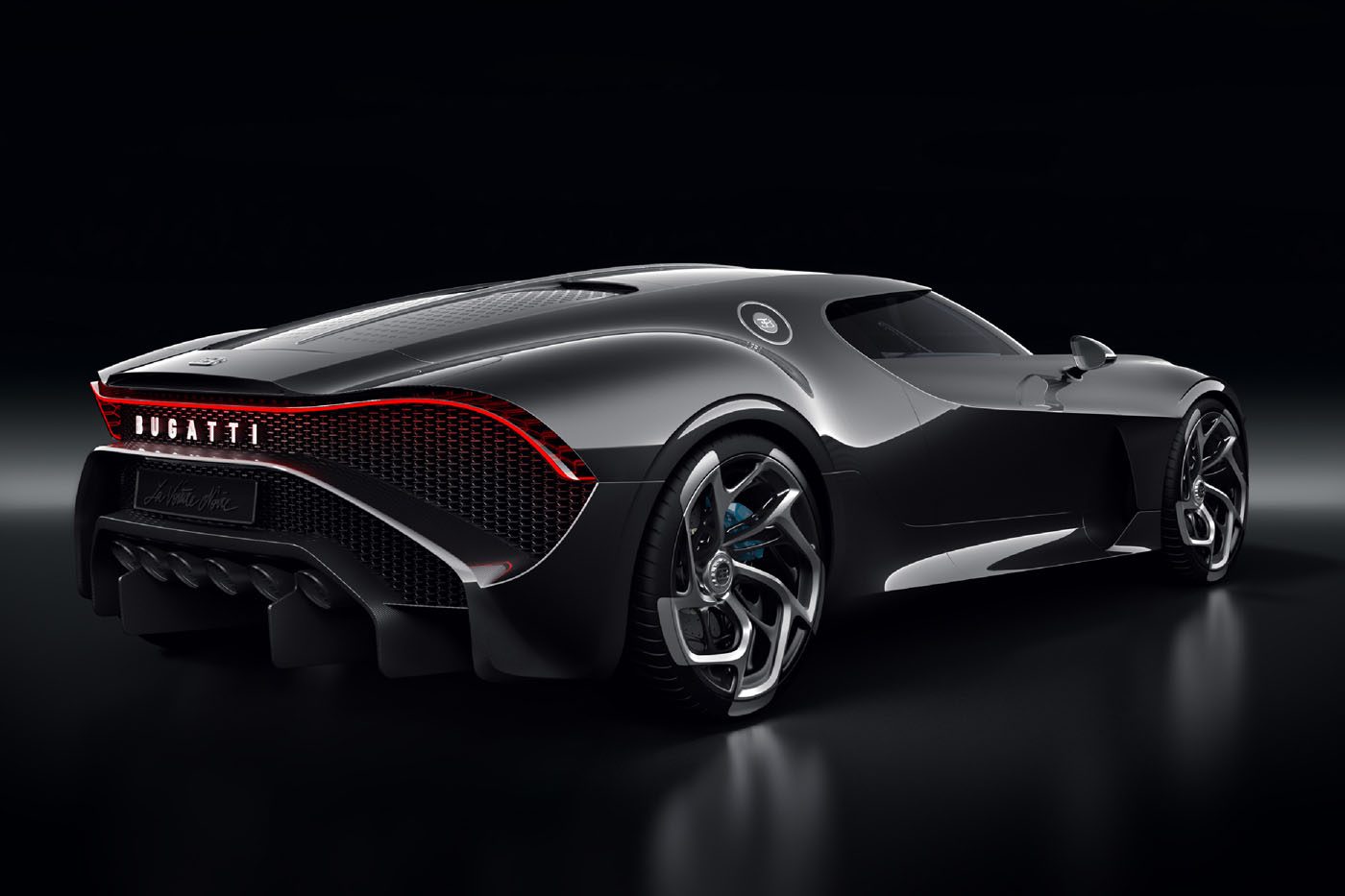
This one-of-a-kind Bugatti, known as La Voiture Noire, pays homage to the legendary Type 57 Atlantic from Bugatti’s illustrious past. Designed to capture the Atlantic’s elegance, mystery, and aura, La Voiture Noire represents a contemporary reimagining of what many consider the perfect car. It features distinctive design elements reminiscent of the Atlantic, such as six exhaust tailpipes and a pronounced dorsal seam that runs the length of the vehicle, splitting it down the middle.
La Voiture Noire stands out for its breathtaking design and engineering excellence, making it one of the most expensive cars in the world. Its allure comes from its aesthetic beauty and technical prowess, reflecting Bugatti’s commitment to pushing the boundaries of automotive design and performance.
The Rolls-Royce Boat Tail, an exquisite creation by Rolls-Royce Coachbuild, is among the most expensive cars in the world. It draws inspiration from the grace and elegance of nautical design. This automotive marvel is distinguished by its Caleidolegno veneer on the “Aft Deck,” a wrap-around windscreen, and numerous other maritime-inspired details. One of its most notable features is the rear compartment that transforms into a sophisticated hosting suite, perfect for luxurious al fresco dining experiences.
Further enhancing its exclusivity, the Boat Tail includes two custom-made BOVET 1822 reversible timepieces, which can either be worn or mounted on the dashboard as clocks. This level of customization and detail underscores Rolls-Royce’s commitment to unparalleled luxury. The Boat Tail made a significant impact with its debut at the prestigious Concours d’Eleganza Villa d’Este, setting a new standard for bespoke automotive luxury and craftsmanship.
The title of the world’s most expensive new production car currently belongs to the Rolls-Royce Droptail, a masterpiece of bespoke automotive luxury. Rolls-Royce has introduced this exclusive model with only two examples so far: the Amethyst and La Rose Noire Droptails, each showcasing unique themes and unparalleled craftsmanship. The plan includes crafting four Droptail cars, with each vehicle tailored specifically to the individual preferences and desires of its owner, embodying the pinnacle of personalized luxury.
The Droptail is the spiritual successor to the illustrious Rolls-Royce Boat Tail and the Sweptail, continuing a legacy of ultra-exclusive, coachbuilt automobiles. This model reflects the highest standards of design and engineering and represents a remarkable expression of status and prestige. With its distinct silhouette and exquisite attention to detail, the Droptail sets a new benchmark for luxury, pushing the boundaries of customization in the automotive industry.
Features – by Khris Bharath – December 25, 2025
Feature Exclusive: Inside the Minds Behind the HF-11 and …
Read more
Features – by Khris Bharath – December 21, 2025
10 Cars That Feature a Central Driving Position
Read more
Features – by Jordan Aquistapace – December 15, 2025
The Most Expensive Rolls-Royces Of All Time
Read more
Features – by Khris Bharath – December 14, 2025
20 Cars That Focused on Analog Engagement and Coachbuildi…
Read more
duPont REGISTRY
duPont REGISTRY Group
Support
© 2026 duPont REGISTRY Group. All Rights Reserved.