► Think all new cars are good? Our writers think otherwise…
► Our worst and least favourite cars of the year
► BYD and BMW M cars get multiple mentions
There aren’t many truly terrible new cars in 2025. In fact we’d go as far to say that this year has had very few bad apples.
Despite that, there’s still an enormous difference between the best and the worst cars, as our writers can attest. It will come as no surprise that this list is one our writers can’t wait to contribute to, and also one of the most well-read features we do every year.
So what are the cars that have us the most deflated this year? It’s worth a reminder that some of these aren’t necessarily bad cars, but rather those that have just left us most disappointed.
This is not a poor car but it’s not what I was expecting. BYD makes great play of the engineering brains that sit at the heart of the company and it is the most incredible organisation – just think what it’s done in the 30 years it’s been around – but I didn’t get much of that genius from driving the BYD Atto 2.
It is perfectly competent but there’s no spark to it and little sense that any of the 45 patents BYD files per day have ended up on it. By all means buy one, but know that it’s just an A-to-B car.
Cripes… Whatever happened to BMW’s M division cars setting the benchmark for fast, elegant executive performance? Look, the BMW M5 is clearly a technical tour de force, bristling with the latest gadgets and gizmos and plug-in-hybrid complexity that will maybe delight those of a Gran Turismo persuasion… But my 2025 encounters with the G90 saloon and G99 Touring left me cold.
When I think back to the exquisite delicacy of an E39 M5, its simple formula of executive bodyshell, discreet makeover and charismatic 400bhp 4.9-litre V8, I find the latest plastic-splattered, frankly ugly exec all a little too complicated, heavy-handed – and, at 2.5 tonnes, just too podgy truly to entertain on a favourite back road blast. Whither the purity of yore?
It’s easy to laugh off phrases such as ‘human-centric’ as marketing guff, but they start to make sense after you drive something like the Polestar 4. Because for all its crisp Scandinavian design and svelte brand image, the 4 is utterly counter-intuitive at times.
I’ve had one for half the year, and in that time, I never really gelled with Polestar’s latest SUV. Among other issues; it doesn’t always unlock; the cruise control is inconsistent and the AEB over eager. Throw in CarPlay gremlins and a dashcam feature that isn’t quite ready yet, and there was always something to be irritated by.
This shows the dichotomy of BMW that – at least in my eyes – the best car I’ve driven all year was a BMW… as was the worst.
The thing about the M5 as an entity is that it has always been a car that is a very good performance car as well as a very good executive express. Having spent a week in in Piers’ long-termer, I can confidently say that the current M5 Touring is merely decent at the former but not very good at being the latter.
Weirdly, my complaints aren’t really that much to do with its weight. Yes, it’s an absolute fatty but, when you’re on the right road it’s impressive. It’s stonkingly fast and surprisingly athletic.
Despite brief moments of greatness, though, it spent the entire week irritating me. Straight from the off, driving Piers’ M5 off his driveway, the seat squeaked. On a £100,000+ car. When the battery is empty, the engine and electric motors act like distant cousins seeing each other at a wedding – it’s all awkward handshakes and bad communication. The car briefly moves forward engine-off, realises there’s no battery power left, kicks in the engine but it then oversubscribes itself and encourages wheelspin. Not what you want just pulling out of your T-junction.
It’s also not very roomy in the back for a car that’s longer than an Intercity 125 – and therefore is also an arse to park. A Porsche Panamera feels like a much more complete car for similar money, so I’d recommend that instead.
I’ve swerved some of the worst examples of four-wheel engineering this year (washing my hair on those days, clearly), so I’m going to have to go a bit left-field, here. I drove a Mercedes E450d estate for a video and, while it was actually a very good car, I was a little disappointed.
That’s because, at the time, I was running a Volvo EC40 (full electric) and the idea of a diesel car with a 600-mile real-world range (rather than the Volvo’s 200-ish miles) appealed hugely. And sure enough, it was mighty convenient. BUT, unless I was on the motorway, the big diesel Merc was nowhere near as nippy, refined or enjoyable to drive as the Volvo.
Stating the obvious? To some degree, yes. However, the point is that I spent most of my time with the Volvo wishing it had a diesel powertrain, but after a few days in the Merc I found myself hankering for the EV again. Goes to show that, for all the frustrations associated with electric cars, petrol and diesel engines aren’t the answer to everything.
To be clear, neither of these electric cars are bad. But both disappoint in separately specific ways. The Ioniq 5 N as my 2024 favourite, so I was looking forward to further application of the intricately programmed fake transmission tech in other high-performance EVs in the Hyundai-Kia portfolio. Yet the deliberately intentioned changes for the EV6 GT make it feel like a diesel, and the car is far better when it’s disengaged.
As for the Alpine A290. This is a hoot in some respects – the overtake button dumping the powertrain’s full whack into the mix with zero fanfare, the cartoonishly overblown styling – but I couldn’t get on with the steering at all. This is supposed to be a hot hatch, right? Then why so numb on initial turn-in? There’s nothing incisive or feelsome about it – a far cry from Renaultsport in its pomp.
I’ve been fortunate this year – I haven’t driven any proper automotive stinkers like I have in previous years, so this choice is made with a lot of caveats as it isn’t really a bad vehicle overall. The GWM POER 300 has a lot going for it – it’s well equipped and great value, has a comfortable and well-designed cabin and is pretty good off road.
There are two reasons why I’ve gone for it, one more serious than the other. The first is the ride. It managed to react to imperfections on a rural B-road that I couldn’t even see and at the sort of 30-50mph speeds that will make up the core of many pickup drivers’ days. It left me feeling weary after even only a short drive.
The second reason is that name. In a world of ridiculous car badges, it’s a special one. I don’t want to have to start every conversation about my new truck by saying ‘No, it’s pronounced ‘Power, actually.’ Sort it out, GWM.
Now, this isn’t new and it certainly isn’t clever. But the Citroen Ami has been facelifted it for 2026, and I genuinely struggle to understand why they’d bother persisting with this contraption. Let me lay my stall out. I am a confirmed Citroëniste. I’ve owned more Citroëns than I care to admit, spanning pretty much everything from 1970 to 2000, and even the flawed ones usually had a way of disarming you.
There was always a flash of brilliance, a moment where you dropped your guard and thought ‘ah, that’s why they did it like this’. But this? I just don’t get it.
I understand the theory. Urban mobility. Car sharing. Parisian chic for people too stylish for the Metro. But others had already nailed that brief decades ago. It was called a scooter. You slip through traffic, irritate car drivers, and park it with theatrical abandon outside the boutique. The Ami, by contrast, takes up the space of a car, lumbers about like a pregnant hippo, and has all the aesthetic appeal of a Beko fridge.
In the UK, it works even less well. As far as I can remember, this is the only test car I’ve ever refused to take home. Why? Because it does 31mph. Unless you live in the middle of London, that’s a death wish. Take it anywhere near an A-road and you’ll be picking bits of yourself out of the grille of the nearest Scania.
So, no thanks. If you want something like this, and I remain baffled as to why you would for the price of a second-hand VW Up! buy a used Renault Twizy instead. That thing gets almost everything right that the Ami gets wrong. Next.
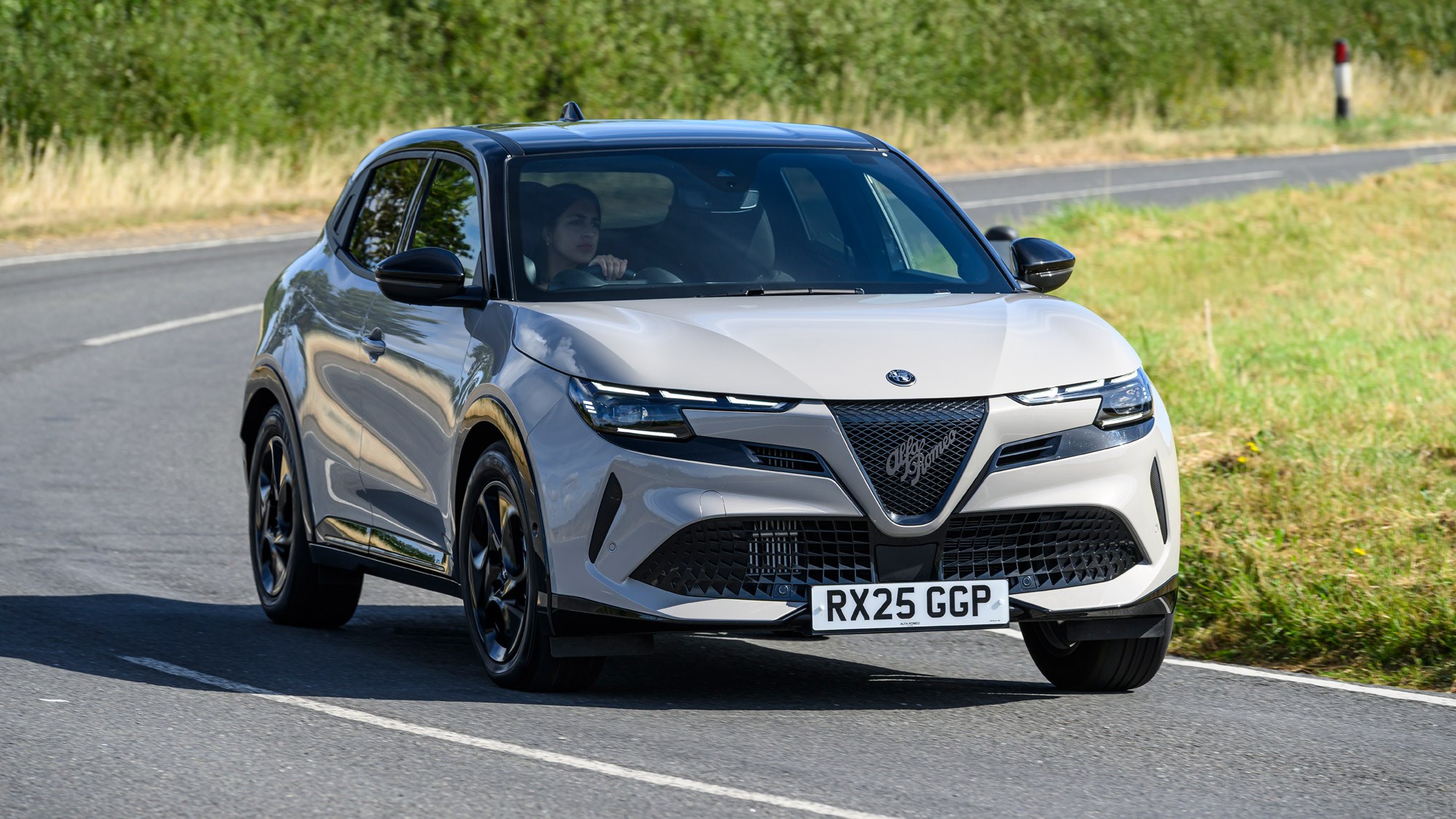
What happened, Alfa? You’d only just rediscovered yourself. You’d developed your own (frankly excellent) platform, you’d launched a worthy successor to the Busso V6 and you’d built a super saloon that could put the fear of God into the BMW M3. But your involvement with Stellantis has made you lose your way again.
I wanted to like the Alfa Romeo Junior, but it wound up being the biggest disappointment to come from Milan since the Arna. Why? Well, like its grandfather, its bones were stolen from an inferior brand. Underneath, the Junior is a Peugeot 2008, which isn’t a great starting point for any car, let alone one from a company that should exclusively produce driver’s cars.
It’s riddled with issues that seem to have been specifically designed to push Alfa’s loyal customer base towards competitors. The steering is lifeless, the chassis isn’t anywhere near as playful as a Puma’s and the cabin is a badly integrated mess of cheap, generic Stellantis switchgear. It just doesn’t feel special.
The powertrain was the final nail in the coffin. Alfa can’t design a car that doesn’t rust and it’s rubbish at making anything electronic work reliably, but it’s always been able to build a great engine. Sadly, Alfa Romeo was forced to adopt Peugeot’s mild hybrid system for the Junior – and the Italians simply couldn’t out-engineer out its inherent French sponginess. So, the Junior doesn’t reward you for driving it quickly. That’s wrong.
It’s painful to watch what Stellantis is doing to Alfa Romeo. The group is killing the reasons for shopping with the brand. I doubt Alfa will make it far into the next decade if things don’t change soon.
To find out more, read our full Alfa Romeo Junior Ibrida review
Now, don’t get me wrong, I think the Citroen e-C3 is a pleasant electric supermini with plenty of redeeming features and qualities. I just think it lacks any wow factor and feels borderline clunky when the likes Renault 5 E-Tech or Hyundai Inster – its key rivals – are brought into the fray. In a segment where clever touches, efficient packaging and style make all the difference, the e-C3 feels like a missed opportunity.
The boot may be big, but it’s awkwardly shaped and appears to use the Hoover Dam as a boot lip. It’s spacious inside but a lot of that can be explained by how awkwardly upright you sit in it. Even the design touches left me feeling cold. Next to the Inster and 5 E-Tech, novelty tags on the door reminding me to ‘be cool’ did exactly the opposite.
There is a general rule of thumb with BYDs. If you buy an EV, it’ll be decent at worst, good at best. Pick something with an internal combustion engine and it just doesn’t feel finished. The Seal U PHEV that is proving increasingly popular wasn’t perfect, but it’s a hell of a lot better than the Seal 6 Saloon and Touring.
As with many Chinese imports, they are nearly cars. While they impress with promised efficiency, standard kit lists, space and price, it feels like the chassis and powertrain were rushed. Spring and damper rates don’t feel well matched, leading to a jittery feel over even slightly imperfect roads and poor body control at speed.
The hybrid system works smoothly enough when you’re gentle, but is loud and unresponsive if you dare accelerate hard, while the steering wheel feels like it’s attached to the front tyres with silly string. Only an Ineos Grenadier steered worse this year.
I’m sure BYD will sell plenty of Seals in this country, and I’m sure there will be plenty of happy customers trading in their baggy old repmobiles for one, but I expect far more polish from a modern car.
There have been a few disappointments this year for me. I love a Mini but the ride on the new Electric Cooper Works was atrocious. The Alpine A290 failed to live up the hype of the superb Renault 5 and I had a Cupra Tavascan long-termer that disappointed for its rubbish reliability. But neither of these are bad cars, or anywhere close.
No, the worst car I drove in 2025 was actually while on holiday in Thailand – my Auntie’s Toyota Yaris Ativ. I have a running joke with her that she manages to always pick the worst hire cars possible while visiting us in the UK, and her choice of car in Thailand explains a lot. The Ativ is a saloon version of the Yaris and primarily sold in more developing countries. A combination of a naturally-aspirated 1.2-litre petrol engine paired to a CVT gearbox is probably the worst powertrain I’ve ever come across, and the cheap, basic interior felt like it had been ripped out of something 25 years old, rather than the six-year-old Yaris it was in. It was a stark reminder of how different the tastes and customer expectations are in different corners of the world.
This year I got to drive my first Fiat 500, the new 500 Hybrid. I adore the way it looks. It’s cutesy, and charming, and it shouldn’t get the kicking it gets for being a ‘basic’ choice. I was so ready to love it. The two of us frolicking around on a sunny autumn day in Turin, snow-capped mountains in the distance, and pirouetting around the famous Lingotto. It was the perfect setup.
But that hybrid (really a glorified start/stop system) is where we started to fall apart. It’s the same powertrain as the old 500 Hybrid, and it didn’t bowl us over back in 2020. It’s painfully slow, sounds hurt, can’t run on electric alone, and isn’t especially economical. It just wasn’t to be. I left Italy heartbroken.
This year, I went to an event at which Kia had made some of its heritage fleet available to drive. I drove all of them starting with a 2001 Magentis, a biggish saloon you’d be forgiven for forgetting. It was soft and wallowy, the V6 engine had a remarkable lack of power. But it was a lovely, comfy, smooth old barge. A great car for going to Sunday lunch at a country pub.
Then I drove a first-gen Sportage from 2003. It was terrible then and it’s terrible now. Gutless engine, floppy gearchange, flimsy body, shuddering ride, approximate steering, surprisingly little space. I couldn’t even make any allowances for it being old because there’s no character to it. It’s worth noting the Mk1 Sportage was among Kia’s first in-house designs; the difference between it and the Magentis shows how rapidly Kia progressed. Compare it to the current Sportage and it’s clear Kia has taken several quantum leaps forward.
New cars editor, car reviewer, news hound, avid car detailer
By Ted Welford
New cars editor for CAR and Parkers. Loves a car auction. Enjoys making things shiny
© 1962-2025 Bauer Media Group
Bauer Media Group consists of: Bauer Consumer Media Ltd, Company number 01176085; Bauer Radio Limited,
Company number: 1394141; Registered office: Media House, Peterborough Business Park, Lynch Wood, Peterborough PE2 6EA and H Bauer Publishing, Company number: LP003328;
Registered office: The Lantern, 75 Hampstead Road, London NW1 2PL
All registered in England and Wales. VAT no 918 5617 01
H Bauer Publishing are authorised and regulated for credit broking by the FCA (Ref No: 845898)