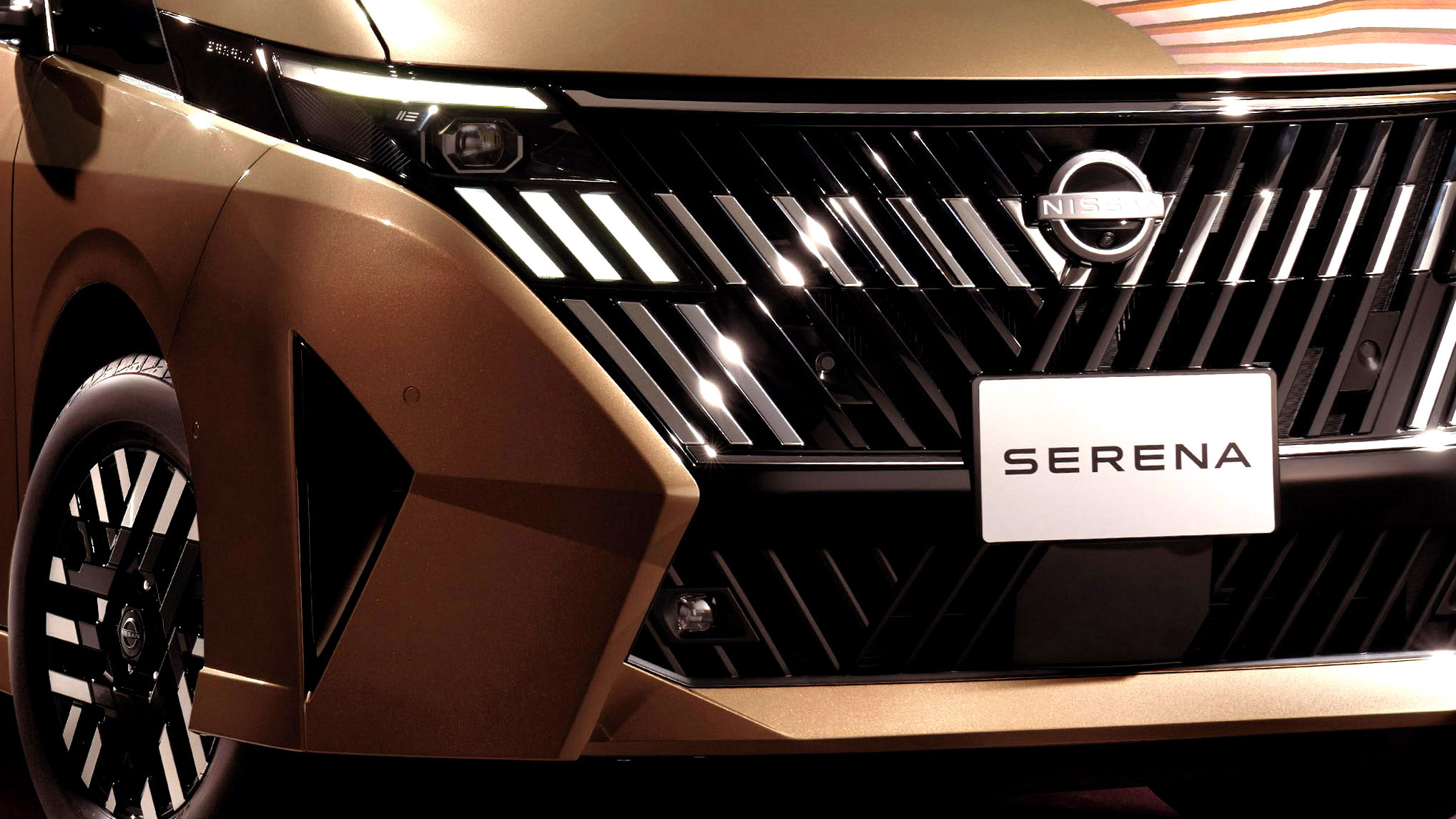
Nissan refreshed the Serena with new grilles, tech, and trims but only high-spec buyers get the full redesign and features
Nissan may have backed out of the U.S. minivan market back in 2017 when it pulled the plug on the Quest to double down on SUVs, but elsewhere, especially in Japan, its people-movers are still very much alive. Among them is the Serena, which has just received a mid-cycle refresh.
More: This Strange Off-Road Minivan Keeps Getting Facelifts After Nearly 19 Years And Still Sells Out
The facelift arrives three years after the debut of the sixth-generation model. Styling tweaks, a revamped infotainment system with Google built-in, and a broader range of trims headline the update. Beneath the surface, the Serena sticks with its familiar platform and engine lineup.
Different Grilles
Visually, the biggest change is the enlarged grille that now dips lower into the reshaped bumper and brings a hint of Lexus to mind. Its asymmetrical pattern resembles the weave of a tailored suit, flanked by sharp triangular intakes and newly vertical LED lights.
Interestingly, though, that new front-end treatment isn’t applied across the full lineup. It’s exclusive to the upper-tier Highway Star V, Autech Line, and e-Power Luxion trims. Lower and mid-spec models retain the earlier, more restrained design, complete with a smaller, less prominent grille.
The Autech variant also features the larger grille, but swaps in a different chrome design, along with its own LED treatment, intake details, and sporty lower-body accents that dial up the visual presence.
More: Nissan Finally Fixed Wireless Charging, Unless You’re Holding The Wrong Phone
Inside, the three-row cabin (with seating for seven or eight) remains largely unchanged, but there’s a new Tailor Fit upholstery option that brings a bit more customization. The 12.3-inch central display now runs updated NissanConnect software, complete with built-in Google services.
This system gives smoother access to Google features, but drops support for ProPilot NaviLink, which has been removed from the options list. However, the broader ADAS suite has been updated to include systems like the new Intelligent Around View Monitor.
More: Japan’s 2026 Toyota RAV4 Gets Something You Don’t
Nissan has also removed the control for the electric sliding doors from the third row, but there is a new optional 15.6-inch rear seat monitor to keep passengers entertained. Finally, the available captain chairs don’t have integrated footrests anymore, meaning that those who want them will have to rely on optional add-ons.
For buyers chasing maximum practicality, the Multi Box and Multi Bed trims offer purpose-built solutions. The Multi Box adds a large-capacity storage unit in the luggage area that doubles as a bench or table. The Multi Bed, on the other hand, converts the cabin into a sleeping space, making it a light-duty option for camping.
Same Power, Different Packages
Under the hood, the Serena sticks with its existing powertrain choices. There’s a 2.0-liter naturally aspirated gasoline engine making 148 hp (110 kW, 150 PS), and an e-Power hybrid setup delivering a total of 161 hp (120 kW, 163 PS). Both configurations are available with either front- or all-wheel drive.
The refreshed Serena is now on sale in Japan, with deliveries set to begin in February 2026. Prices start at ¥2,785,200 (around $17,700 at current exchange rates) for the base gasoline model, topping out at ¥5,099,600 (roughly $32,400) for the hybrid e-4ORCE Multi-Bed Autech version.
Its main competitors include the Toyota Noah and Voxy twins, the Honda Step WGN, and the tougher-looking Mitsubishi Delica D:5.
Google News
MSN Start
Thanos Pappas, a product design engineer by trade, has been wading through automotive journalism for… Read full bio
Related Article