Freezing weather and icy roads caused problems across the Netherlands during the early morning hours on Wednesday, prompting warnings from Dutch meteorological office KNMI and infrastructure agency Rijkswaterstaat. Thermometers dipped several degrees below zero, but should warm up a bit on New Year’s Eve, which will be quite blustery by midnight. Strong gusts of wind were expected on Jan. 1, peaking at up to 90 kilometers per hour.
With overnight temperatures falling to -5 degrees Celsius in some locations, a Code Yellow weather warning for slippery conditions was issued everywhere in the Netherlands on Wednesday, except on the Wadden Islands. “There is a risk of accidents due to slippery bridges, roads, cycling paths, and sidewalks,” said the KNMI.
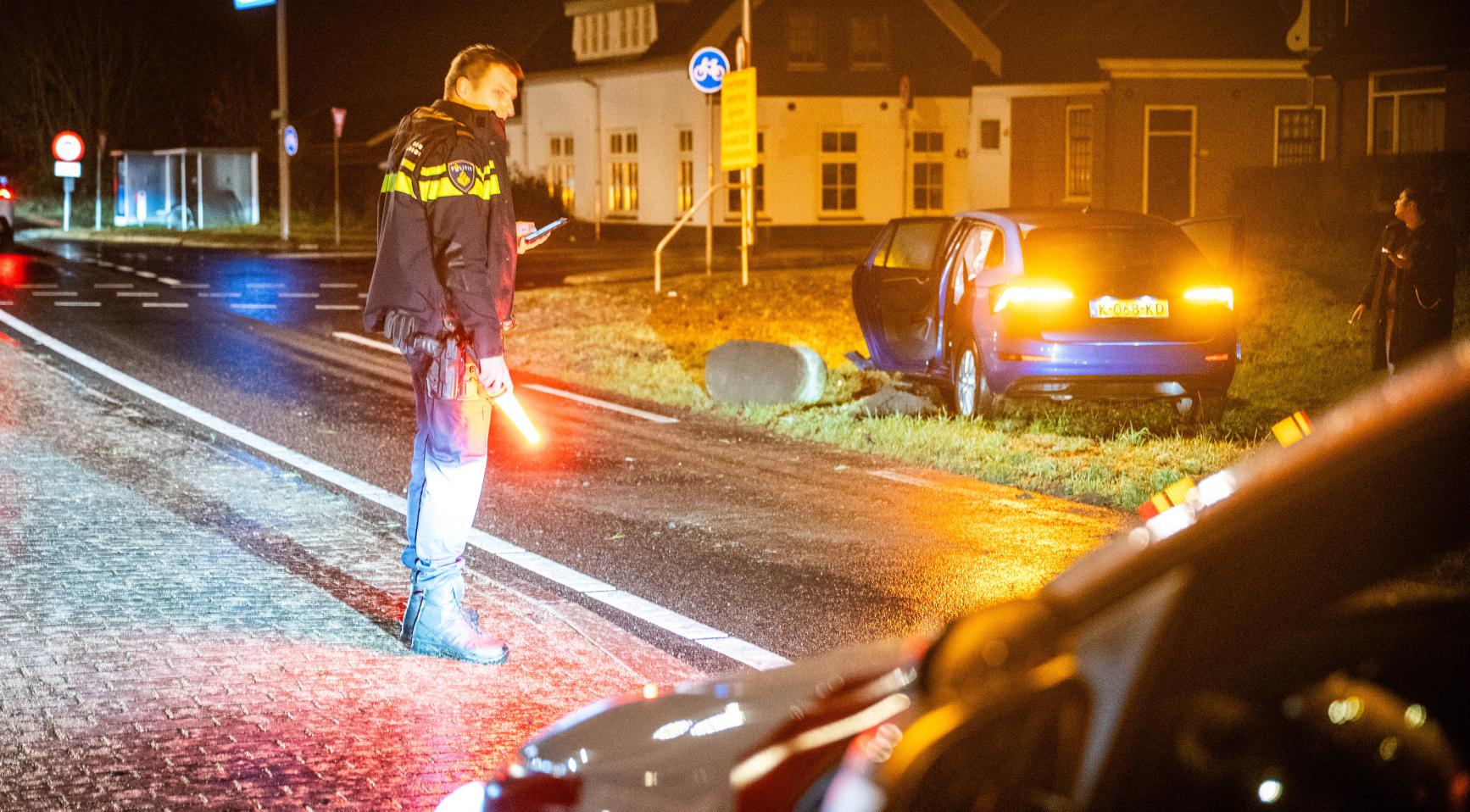
One car wound up upside down in a watery ditch in Rijswijk, Zuid-Holland, according to Omroep West. A police car which responded to the scene also skidded off the road and landed in the water, video from District 8 showed.
Not far from there in Schiedam, a police van was unable to get moving because of the icy roads and needed to be towed to firmer ground. Another car also slid off the road on the N231 in Aarlanderveen, also in Zuid-Holland, where frost developed on the tarmac.
One person was hospitalized after a car overturned into a ditch in Spierdijk, Noord-Holland, NOS reported. And in Schalkhaar, a car was badly damaged after crashing into the guardrail on a bridge, saving the driver from winding up in the stronger waters of the Overijsselse Kanalen.
The A58 in Zeeland and western Noord-Brabant was particularly affected, with 11 collisions in total. Police in Zeeland also said “extremely slippery conditions” caused several injuries due to cyclist crashes, pedestrians slipping, and other collisions, according to ANP
Nearly 2.4 million kilograms of salt were spread along over 35,500 kilometers of Dutch highways from 7 p.m. on Tuesday through 7 a.m. on Wednesday, according to infrastructure agency Rijkswaterstaat. The icy roads warning is expected to remain in effect until 10 a.m. nearly everywhere, and until 11 a.m. in the provinces of Limburg and Noord-Brabant, where problems were expected to be a bit worse.
Clear skies over the Netherlands were expected to become cloudy over the course of Wednesday morning, with strong gusts of wind near the western and northern coasts. The last day of 2025 is expected to remain mostly dry, though some scattered showers could effect people in the north of the country.
The temperature will hold around 6 degrees during midday, with the mercury dipping only to about 5 degrees near the western shore as the countdown to the New Year gets underway. Those in the southeast can expect colder weather at the freezing point.
Gusts of wind were expected to be strong enough to interfere with some New Year’s plans, with traditional bonfires at the beaches in The Hague already expected to start earlier in the evening to prevent problems caused by burning embers flying around as in previous years. Westerly winds will gradually increase in power over the course of the day, reaching up to 49 kilometers per hour in most places, and 61 km/h near the North Sea.
The strong wind will continue into New Year’s Day, even reaching up to 74 km/h along the IJsselmeer region, the KNMI said. The wind will also bring an increased chance of rain moving from the north to the south of the country during the morning hours, and frequent showers are expected throughout the afternoon.
This will gradually turn to freezing rain as the moderate daytime temperature begins to fall during the evening hours. The first evening of 2026 will be marked by particularly stormy weather, the KNMI said.
The northern coastal area will be battered by wind gusts reaching up to 90 km/h as Thursday ends and Friday begins. “Partly cloudy with wintry showers,” are expected, according to the KNMI.
“Snow will develop in several places from Friday evening. From overnight into Saturday, there will be a light frost inland, with moderate temperatures in some places. Daytime temperatures will reach a few degrees above freezing in most places, with the coast being noticeably colder than in the east and southeast.”
© 2012-2025, NL Times, All rights reserved.
Related Article