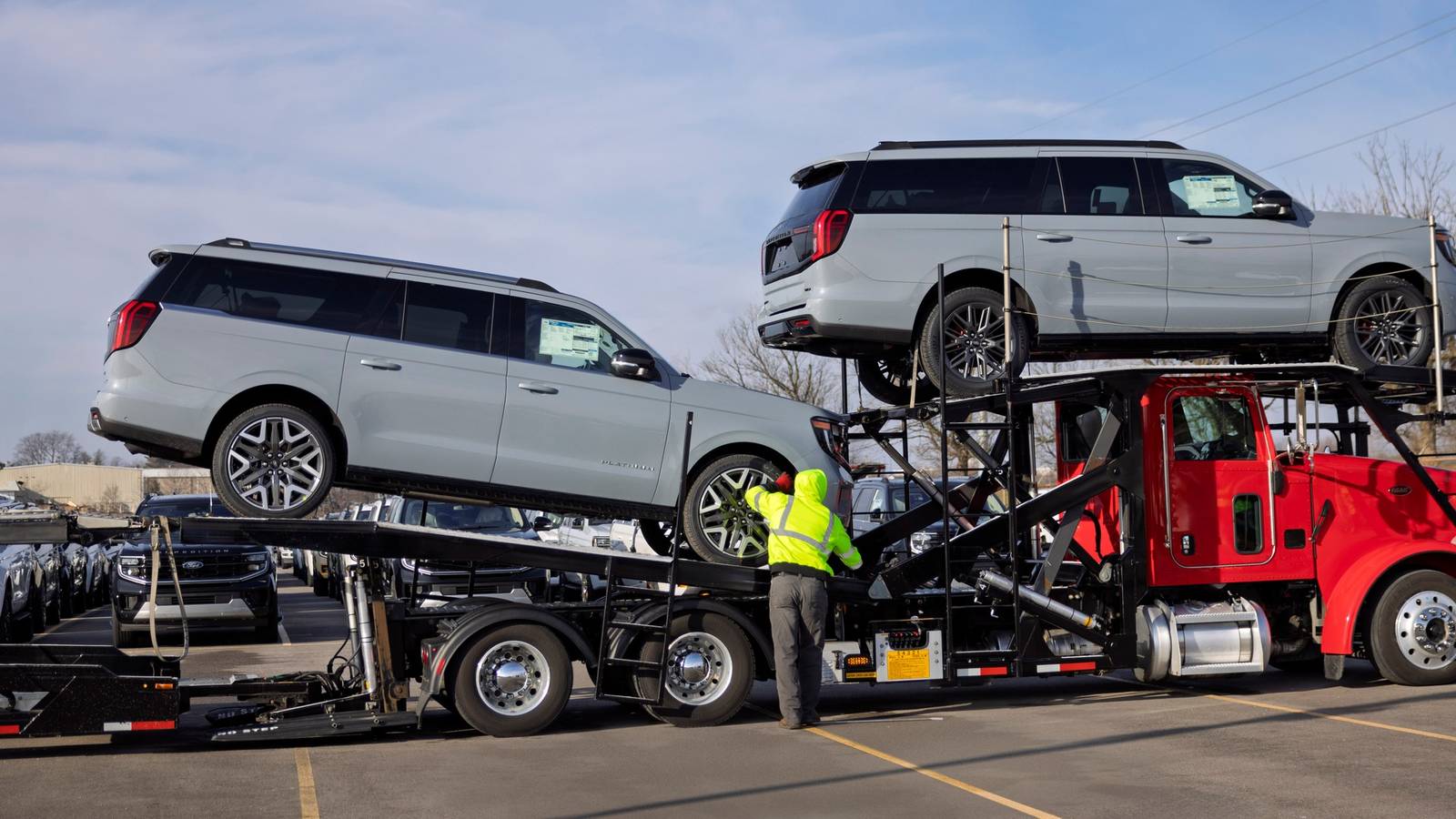
The average price paid for a new vehicle in the US cracked the $50,000 mark for the first time at the end of September 2025. But rather than giving shoppers pause, buyers willing to pay top dollar have still continued to push that number higher. With December data now in, Americans have driven the average transaction price to a new record of $50,326, and there’s little evidence that the market is cooling off anytime soon.
The previous record set in September was widely attributed to a rush of buyers snapping up expensive EVs ahead of the federal tax credit program’s September 30 deadline, with expectations that prices would ease in the months that followed. That hasn’t happened. New data from Cox Automotive, based on transaction prices compiled by Kelley Blue Book, shows the opposite trend.
The numbers are staggering when viewed against previous years. In December 2015, the average new vehicle price sat at roughly $35,000, itself a record at the time. Fast-forward just a decade and that figure has climbed by nearly 44%, underscoring just how dramatically the market has shifted.
The steepest jump came during the pandemic, when supply-chain shortages and thin inventories gave automakers – and dealerships – room to push prices higher. The average new vehicle transaction price rose from about $42,000 in December 2020 to roughly $47,500 just one year later, and pricing never fully retreated once inventories normalized. They’ve done the opposite. The average MSRP also reached a new record in December 2025, climbing to $52,627, a 1.2% increase year over year.
The automotive world is pivoting heavily to luxury, which could become a problem.
Total sales of new vehicles in the US are estimated to have increased by 2.3% in 2025 to reach 16.3 million vehicles, according to S&P Global data. Of these, EV sales represented about 1.28 million units, down 2% year-on-year. While higher-priced EVs did play a role in lifting the average new price for a vehicle, the data shows full-size pickup trucks and luxury vehicles had a far greater impact. Nearly 20% of December sales came from luxury brands, according to Cox Automotive. And full-size pickup sales topped $15 billion for the first time, with the average price paid for one last month registering at $66,386.
When it comes to individual brands, the data excludes low-volume exotic marques that would otherwise skew the figures upward. Even so, the brand with the highest average transaction price last month comes as little surprise. That honor goes to Porsche, which posted an average December transaction price of $123,990, up 7.2% from a year earlier.
At the opposite end of the spectrum, shoppers hunting for affordability found it at Mitsubishi, where the average transaction price last month landed at $34,227. That figure, however, was still up a hefty 25.3% year over year, pointing to increased demand for the brand’s value-oriented lineup. It’s also worth noting that several automakers bucked the broader trend and saw prices fall over the past year. The biggest drop came at Acura, where the average transaction price declined 7.8% year over year to $49,824.
The last time things were this bad was the Great Depression in 2009.
Looking ahead, the market shows few signs of easing. According to data from NerdWallet, 20.3% of buyers hopping behind the wheel of a new vehicle in the fourth quarter of 2025 agreed to monthly payments topping $1,000 – the highest share ever recorded and up from 19.1% a year earlier. And buyers are increasingly willing to stretch auto loans to 72 and even 84 months, with some lenders now offering terms as long as 96 months. With financing terms growing longer and monthly payments climbing, new pricing records could be firmly in play again in 2026.
Sources: Cox Automotive, NerdWallet, S&P Global
We want to hear from you! Share your opinions in the thread below and remember to keep it respectful.
Your comment has not been saved
This thread is open for discussion.
Be the first to post your thoughts.
Related Article