Latest
AI
Amazon
Apps
Biotech & Health
Climate
Cloud Computing
Commerce
Crypto
Enterprise
EVs
Fintech
Fundraising
Gadgets
Gaming
Google
Government & Policy
Hardware
Instagram
Layoffs
Media & Entertainment
Meta
Microsoft
Privacy
Robotics
Security
Social
Space
Startups
TikTok
Transportation
Venture
Staff
Events
Startup Battlefield
StrictlyVC
Newsletters
Podcasts
Videos
Partner Content
TechCrunch Brand Studio
Crunchboard
Contact Us
One of the design features that became synonymous with Tesla has been banned in China.
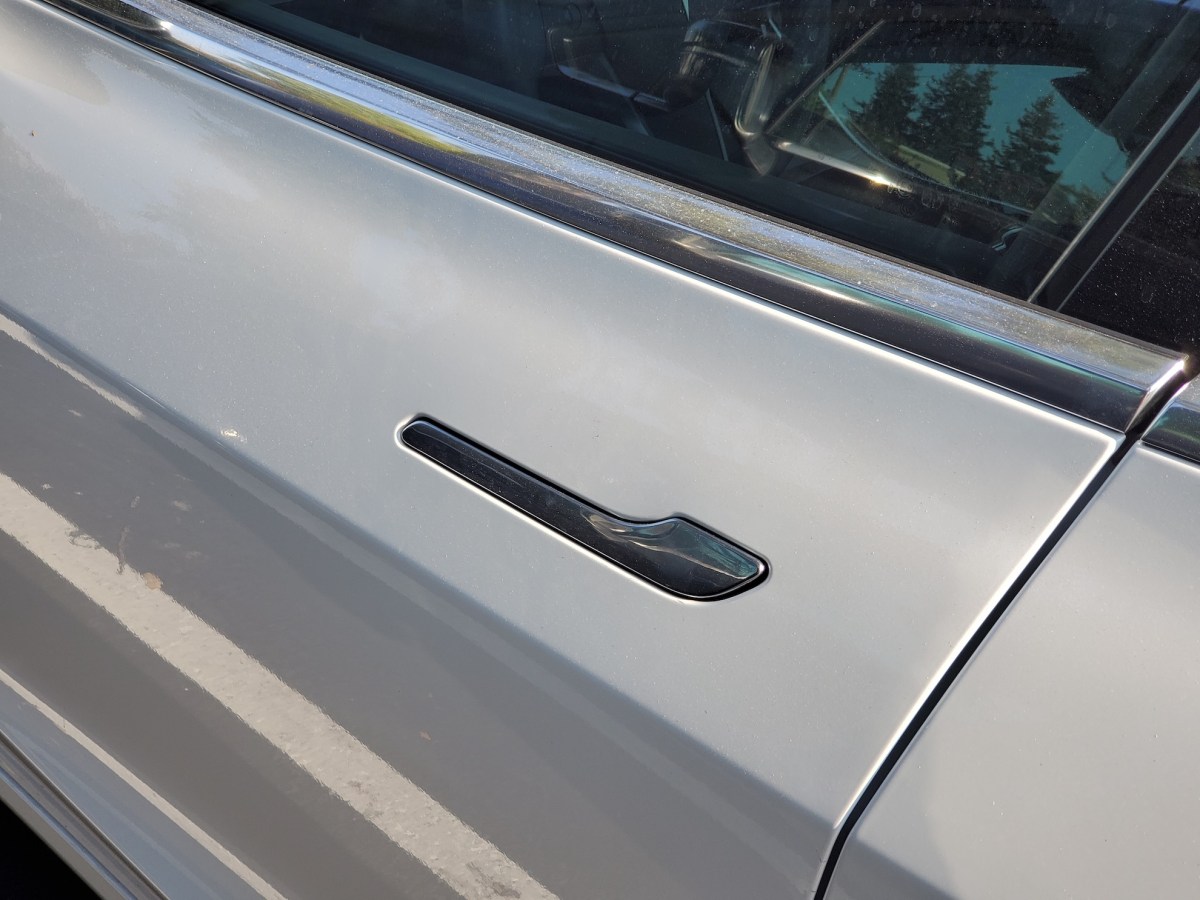
Under new safety rules published Monday by China’s Ministry of Industry and Information Technology, cars sold in the country must have mechanical releases on their door handles. The new rules, which go in effect January 1, 2027, will prohibit the hidden, electronically actuated door handles popularized by Tesla — and now found on numerous other electric vehicles in China.
The new rule dictates that each door (excluding the tailgate) should be equipped with a mechanically released external door handle. Vehicles must also have a mechanical release on the interior of the vehicle. Bloomberg previously reported on the new safety policy.
Numerous high-profile fatal incidents, in which occupants have become trapped in their vehicles, have raised concerns among safety regulators and advocates globally. China is the first country to issue a ban.
An investigation by Bloomberg last September uncovered problems with the concealed door handles on Tesla vehicles, citing several crashes in which first responders or occupants were unable to open the doors because the electronic door locks weren’t getting enough power from the vehicle’s battery system to work properly. The U.S. National Highway Traffic Safety Administration then opened a defect investigation into certain Tesla Model Y and Model 3 door handles. While Tesla does have manual releases inside its vehicles, federal investigators noted that the releases can be hard for children to access, and many owners are unaware of their existence. Some U.S. lawmakers have proposed regulation requiring manual door releases in all new vehicles.
Fatal incidents in China, including a crash involving a Xiaomi SU7 electric sedan, prompted regulators there to propose changes to EV door handles last year.
The Chinese government began the process in May 2025 with more than 40 domestic vehicle manufacturers, parts suppliers, and testing institutions participating in the initial research. More than 100 industry experts held multiple rounds of discussions to determine the standard framework and form a draft standard of what would become the Safety Technical Requirements for Automobile Door Handles rule, according to the Chinese government’s standards agency.
That included dozens of automakers, including Chinese companies such as BYD, Geely Holdings, SAIC, and Xiaomi, as well as foreign automakers, including General Motors, Ford, Hyundai, Nissan, Porsche, Toyota, and Volkswagen. Tesla, however, was not listed as an official “drafter,” according to information posted on the standards agency’s website.
Topics
Tickets are live at the lowest rates of the year. Save up to $680 on your pass now.
Meet investors. Discover your next portfolio company. Hear from 250+ tech leaders, dive into 200+ sessions, and explore 300+ startups building what’s next. Don’t miss these one-time savings.
Nvidia CEO pushes back against report that his company’s $100B OpenAI investment has stalled
OpenClaw’s AI assistants are now building their own social network
Elon Musk’s SpaceX, Tesla, and xAI in talks to merge, according to reports
Waymo robotaxi hits a child near an elementary school in Santa Monica
Tesla is killing off the Model S and Model X
Tiny startup Arcee AI built a 400B-parameter open source LLM from scratch to best Meta’s Llama
Everything you need to know about viral personal AI assistant Clawdbot (now Moltbot)
© 2025 TechCrunch Media LLC.