Back in August of 2023, we discovered a filing at the German Patent and Trade Mark Office from Porsche aiming to make it possible to adjust wheel camber remotely – camber being the inward and outward tilt of the tire and wheel assembly when viewed from the front. Essentially, when the top of the wheel is angled inward slightly, the outside tire’s contact increases as the weight shifts in a corner.
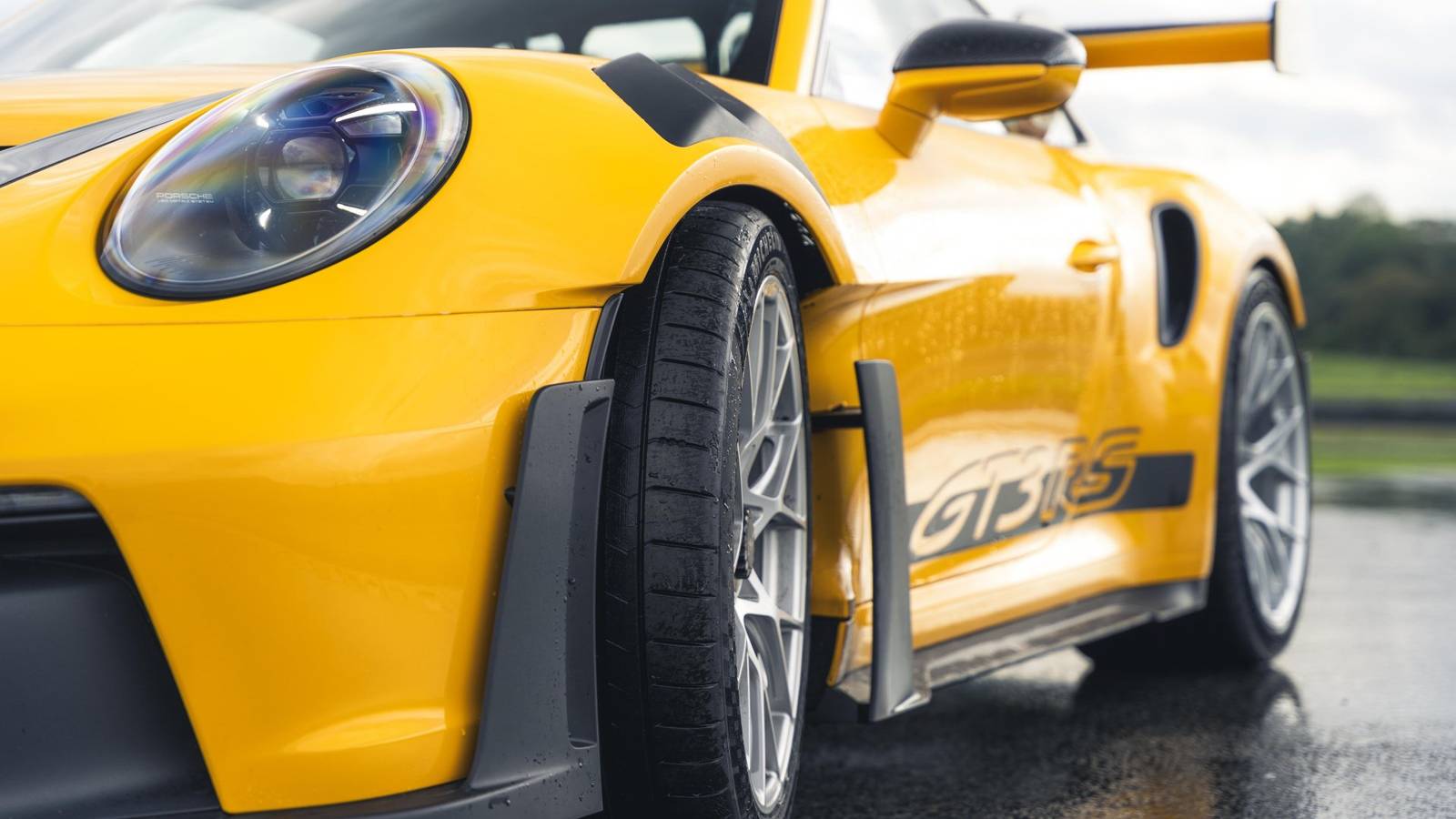
It’s an important tuning component in a sports or race car setup, so being able to tune it without getting out of the car would be of huge benefit. Porsche has now filed two new patents looking at alternate ways of doing the same, suggesting the original wasn’t a mere flirtation with the idea and that it may be searching for the best way to make the tech viable in a roadgoing car like a 911 GT3 RS, or maybe even the forthcoming GT2 RS.
The previous patent filing proposed an actuator positioned above, and separate from, the upper wishbone that would be able to push and pull the top of the wheel carrier in and out to adjust camber. But the new filings, both filed with the German patent and trademark office (DPMA), propose a neater integration of similar actuators within the upper wishbone components.
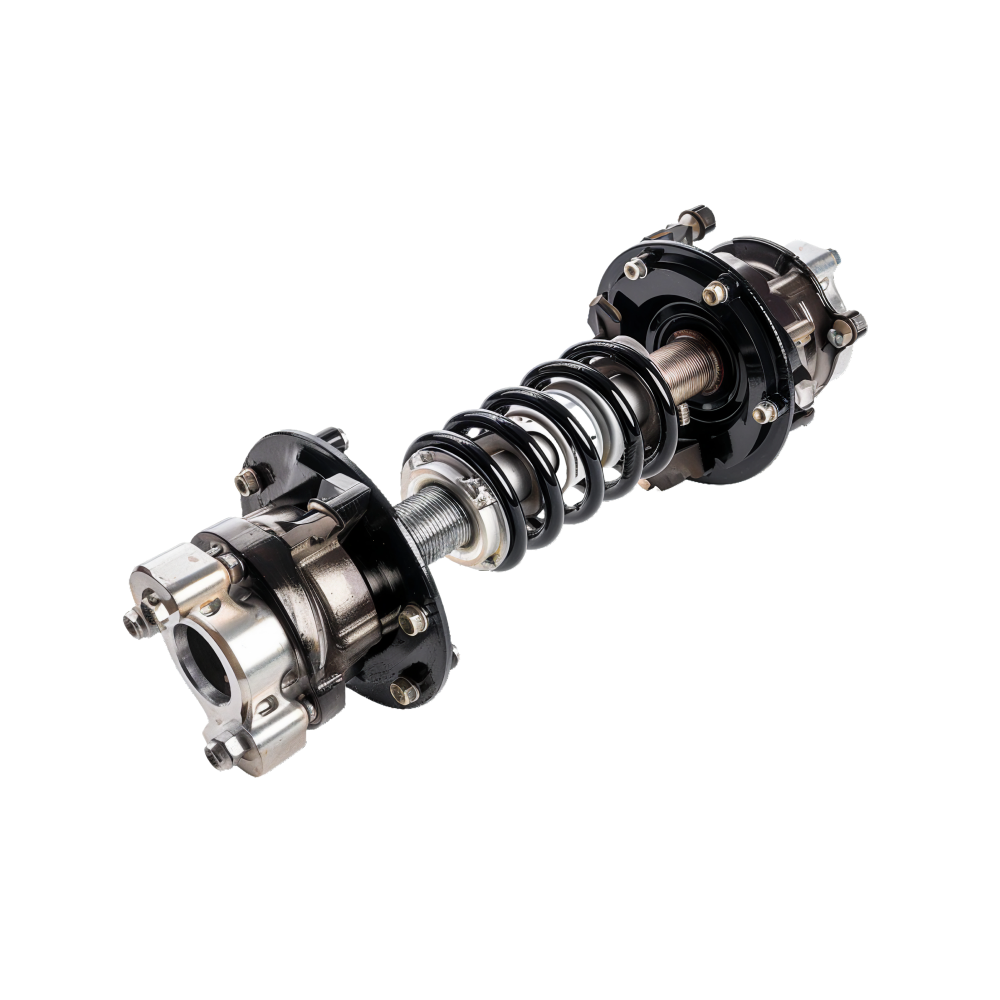
The first patent (pictured above) indicates a double-wishbone suspension setup, which is exactly the configuration used on the current GT3 and GT3 RS. Praised for its management of wheel alignment throughout the suspension travel, the double wishbone configuration is ideal for track situations when vehicle handling is pushed to its limit. In this proposal, Porsche envisages the actuator being mounted at the point of convergence of the upper wishbone’s arms, where the top swivel joint would typically attach to. As before, the actuator could push or pull the top of the wheel in or out to adjust the camber on the move.
The second patent differs slightly in that there is no top wishbone at play, with this setup depicting a multi-link suspension setup as used on more comfort-biased models like the Panamera and Taycan. In this instance, two upper connecting arms each have actuators, which would enable adjustments in two areas. This way, Porsche could control not just the camber, but possibly even the toe of the wheel while moving, or even through the duration of the suspension’s movement arc.
The patent initially filed in 2016 looks to improve the aerodynamics under the rear of future Porsche models.
Both patents use similar terminology to describe various inputs having an effect on how these actuators operate, including acceleration sensors. Here, acceleration is technical speak for any significant force exerted on the vehicle, not just forwards or backwards, but laterally (side to side) too.
Being able to adjust camber in “real time or quasi-time” would benefit a car immensely, and Porsche is not talking just about using the acceleration sensor, it’s also talking about adjusting for road conditions and driving situation. Getting more specific, the patent mentions “tire types, sizes or tire pressure, a tire position, a steering angle, a driving mode, for example sports or comfort-oriented, and/or the like.” It even goes on to talk about using just about every sensor a car can have here in 2026, including satellite supported sensors like GPS.
That suggests the camber adjustment would be quick, but not just for setting track times. For example, on a wet road or slippery conditions when the car is being driven slowly, the camber could be reduced to near zero for maximum traction. Or, just when the car comes to a stop, so there is a maximum tire patch meeting the road for acceleration. The Porsche 911 already has the engine at the back to help the rear wheels push down, but increasing the contact patch on the road can only help more.
Porsche’s electric turbochargers have a hidden benefit no one saw coming.
The possibilities for using remote camber adjustment are huge, particularly if each corner of the car is adjusted individually. When cornering, adding positive camber (angling the top of the tire inward) to the outside wheels while lessening camber on the inside wheel could increase grip dramatically. Then being able to adjust the rear camber when accelerating out of the corner, moving towards zero camber as the car straightens out, could be a big tuning boost when laying down lap times. Using a mix of acceleration and steering angle sensor alone would make a positive difference.
This seems like one of those patents that signals a brand’s actual intent rather than protect a half-baked idea or to rake in some royalties when another brand figures out how to actually do it – as fellow VW brand Lamborghini has already done through other means. It’s the kind of thing Porsche would love to use. But, there will be engineering hurdles. It adds complexity to the suspension setup, it would have to work flawlessly every time all the time, and the forces the actuators would have to deal with are immense. Combine that with added computing power needed, and likely additional weight for the new components, and it becomes a delicate balancing act. Can Porsche get enough extra performance out of the tech to offset the complexity and weight? Time will tell.
Patent filings do not guarantee the use of such technology in future vehicles and are often used exclusively as a means of protecting intellectual property. Such a filing cannot be construed as confirmation of production intent.
Source: DPMA 1, 2
We want to hear from you! Share your opinions in the thread below and remember to keep it respectful.
Your comment has not been saved
This thread is open for discussion.
Be the first to post your thoughts.