Your digital subscription includes access to content from all our websites in your region. Access unlimited content and the digital versions of our print editions – Today's Paper.
Have you ever felt like things are spiralling out of control lately? That horrible feeling that you know something is wrong and people are standing idly by and allowing it to happen regardless?
or signup to continue reading
I have increasingly felt that way about new car safety, so much so I feel the time has come to draw a line in the sand.
Let me be clear from the beginning — safety should be everyone’s top priority in the car industry. Whether it’s engineers, designers, salespeople and even us motoring writers – we should all be doing our best to ensure that you (the new car buyer) get the safest car possible.
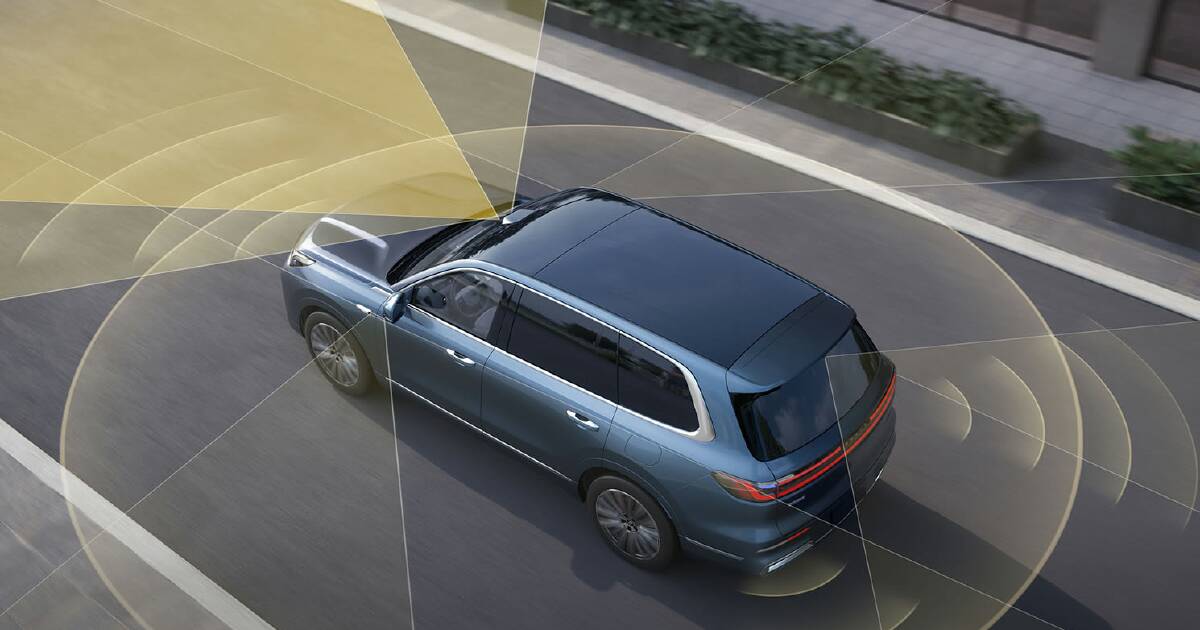
However, in recent years I have started to feel that new car safety has not only stopped improving consistently, but has actually begun to regress. Why? The over-reliance on advanced driver assistance systems (ADAS) and the seemingly inconsistent way it is applied to new vehicles and equally inconsistent ways cars with poor technology are applauded by third parties and hailed as superior.
I am fortunate enough to drive dozens of new cars every year and increasingly the difference between good active safety systems and bad ones are becoming more and more apparent, frankly annoying and distracting.
The systems I’m talking about are ones like ‘driver attention monitoring’, ‘speed limit recognition’, ‘active lane keeping assistance’ and similar. Good versions of these systems keep you alert, informed and safe. Bad versions of these systems are distracting to the point of dangerous.
That’s because, unfortunately, for many brands adding these active safety systems became a box ticking exercise, simply having them was enough as they weren’t tested in the real world by safety authorities, even though brands were punished for not having them.
As Peter Matkin, Chery’s Director of International Engineering for International Programs, told me last year, many of these systems are developed by third-party suppliers who are simply working to a theoretical range and aren’t practically applying it to real-world situations.
“When we started with all of the ADAS work, we were effectively just meeting legislation,” Matkins conceded. “We told the suppliers, this is the legal requirement, we need to meet this. So from a supplier perspective, he doesn’t care whether the car bounces between the lanes. He doesn’t care. When I drive the car, I say, ‘this is shit, we’re not selling this.’ So, you know, we now give a lot more targets now, to the supplier.”
That’s a refreshingly honest answer from a car company engineer and it’s good to know that people like Matkin are working to ensure that systems actually work for customers on the road and not just on a piece of paper.
Recently I drove a new vehicle that beeped incessantly, any time the speed limit changed or if I didn’t slow down fast enough, or even if I just looked away. Literally, on several occasions it beeped to warn me that I was ‘mildly distracted’ at which point I looked down to see what the beeping was about (in case it was something dangerous) only for the system to then beep again and tell me I was ‘moderately distracted’ — by the car’s own beeps!
The end result of poorly calibrated ADAS is drivers will find a way to turn it off, which unfortunately tends to be required every time you start the car – which is a deliberate requirement from legislators that typically travel in the back seats, rather than the driver’s seat…
What’s the difference between a car that doesn’t have active lane keeping and one that does, but has such a bad system the driver turns it off every time they start the car? Both cars operate the majority of the time without the system, so a sub-standard system is effectively useless.
ANCAP, to its credit, has updated its testing protocols for 2026 to try and address some of these issues. Its testing will now try and provide a more detailed analysis of how the various active safety systems work and encourage more seamless operation.
Because, make no mistake, properly calibrated ADAS can work and when it does it’s brilliant. Some brands are clearly spending more time on these systems than others, and the net result is a safer experience for the driver without any of the irritating distraction of endless beeps and warnings.
Unfortunately, the recent rush to ensure all these systems were installed regardless of functionality means there will be a generation of dangerous distracting cars on our roads for the foreseeable future.
Daily
Today's top stories curated by our news team. Also includes evening update.
Weekdays
Grab a quick bite of today's latest news from around the region and the nation.
Weekdays
Catch up on the news of the day and unwind with great reading for your evening.
Weekly
Get the editor's insights: what's happening & why it matters.
Weekly
The latest news, results & expert analysis.
Weekly
Love footy? We've got all the action covered.
Weekly
Going out or staying in? Find out what's on.
Weekly
Real local, smart property news for regional Australia
Twice weekly
Stay in the know on news that matters to you with twice weekly newsletters from The Senior.
Weekly
Every Saturday and Tuesday, explore destinations deals, tips & travel writing to transport you around the globe.
Weekdays
Sharp. Close to the ground. Digging deep. Your weekday morning newsletter on national affairs, politics and more.
Twice weekly
Your essential national news digest: all the big issues on Wednesday and great reading every Saturday.
Twice weekly
Get real, Australia! Let the ACM network's editors and journalists bring you news and views from all over.
Weekly
Get news, reviews and expert insights every Thursday from CarGuide, ACM's exclusive motoring partner.
As it happens
Be the first to know when news breaks.
Daily
Your digital replica of Today's Paper. Ready to read from 5am!
Daily
Test your skills with interactive crosswords, sudoku & trivia. Fresh daily!
Advertisement
Advertisement
Related Article